

We can celebrate the turning of the overdose tide, but we can’t afford to take our foot off the pedal.
Since 2015, over 1,000,000 people in the United States have died from a drug overdose. While this total continues to rise each year, it is critical that we regularly revisit the current trends and dynamics within the overdose epidemic.
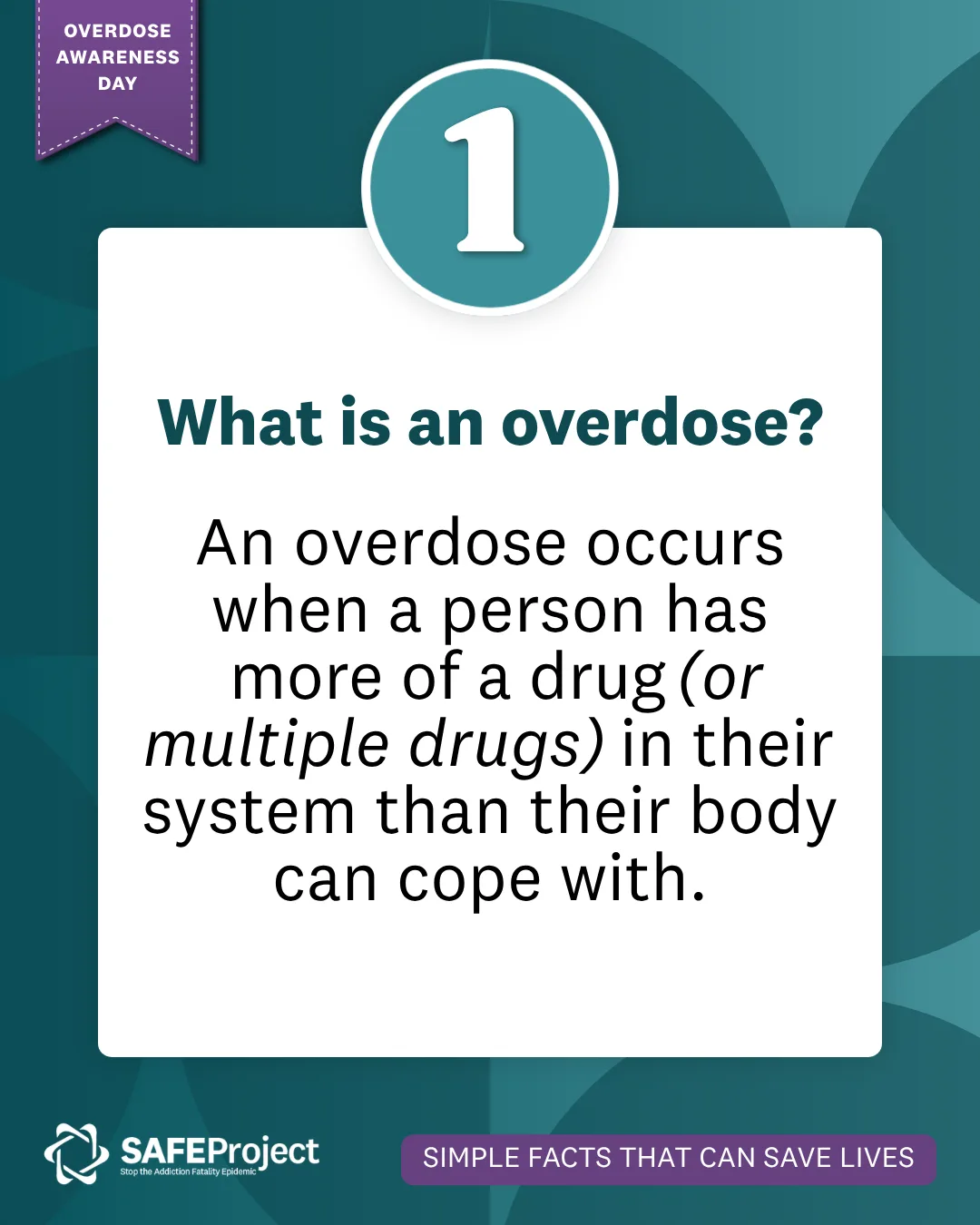
This knowledge allows us to understand what interventions are working, what new interventions and approaches may be needed, and how we can keep ourselves grounded in the realities of today.
So, what does the data currently tell us? First, let’s look at the year-over-year drug overdose rates in the United States:
National Overdose Rates are Falling
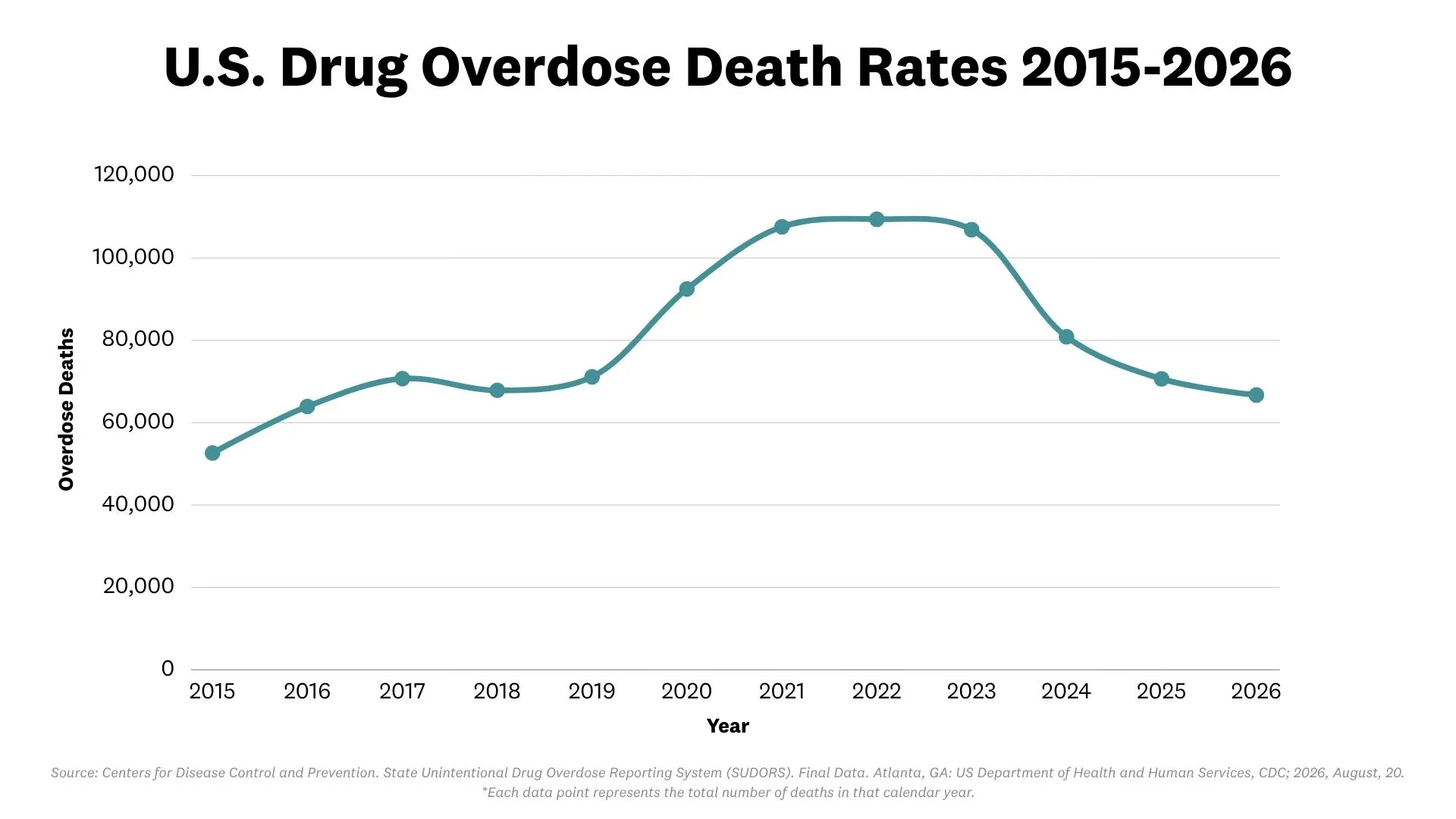
Since the peak of the overdose death rate in 2023, we have seen a steady and sharp decline in fatal overdoses for three straight years. This drop from 111,000 deaths per year to 68,000 deaths per year is a positive change, but the recent drop has seemingly returned the death rate to the level it was when overdose was officially declared a national public health emergency in the United States in 2017. We can celebrate the turning of the overdose tide, but it would be a mistake to consider the overdose crisis over or solved. Especially when we see that states such as Arizona, New Mexico, and South Dakota have seen increased overdose death rates and that older Americans and Black and Native American communities have not benefitted from these declines at the same rate, we can’t afford to take our foot off the pedal of pursuing solutions and public health.
We’re Still Making Sense of Why the Overdose Death Rate is Declining
Recent research and essays have taken a strong look at the factors that may together be contributing to the decline in fatal overdose rates alongside a notable yet less significant decline in nonfatal overdoses:
- expanded access to naloxone (the overdose reversal medicine)
- expansion of access to medications to treat addiction like buprenorphine and methadone
- changes in the overall illicit drug supply regarding substances such as xylazine, illicit pill consistency, and fentanyl supply shocks
- incredibly high overdose rates were simply not sustainable in relation to the number of individuals using drugs – a theory called “depletion of susceptibles”
Yet, as the research continues, it’s not clear which of the dynamics above had the most impact on overdose death rates or how much of an impact they had on their own. Still there are key themes we encourage everyone to consider.
Naloxone Plays a Critical Role
While the focus of national and local news often shifts from substance to substance – from xylazine, to kratom, to nitazenes – it is clear that naloxone still works to reverse overdoses related to opioids, and it’s better to use naloxone in an emergency where someone is unresponsive than to not. With 73% of overdose deaths including an opioid, naloxone could have been a very useful tool in reversing these overdoses and preserving lives. Naloxone is increasingly seen as a critical part of first aid among professionals and bystanders, and by increasing access to it and education on its use, we’re equipping communities to support each other.
Click here to learn more about how to use naloxone and how to get naloxone to carry with you.
Polysubstance Use – Particularly With Stimulants – Has Taken Center Stage
Risk for overdose from opioids is still largely limited to illicit pills, powders, and crystal drugs – even those drugs not intended to be opioids. Since 2021, data has shown a shift from fentanyl alone as the sole substance driving the highest percentage of overdoses to a mixture of stimulants (cocaine and methamphetamine) and opioids driving the greatest proportion of overdose deaths. In fact, overdose deaths from fentanyl alone were surpassed by reported stimulant-only deaths in 2024.
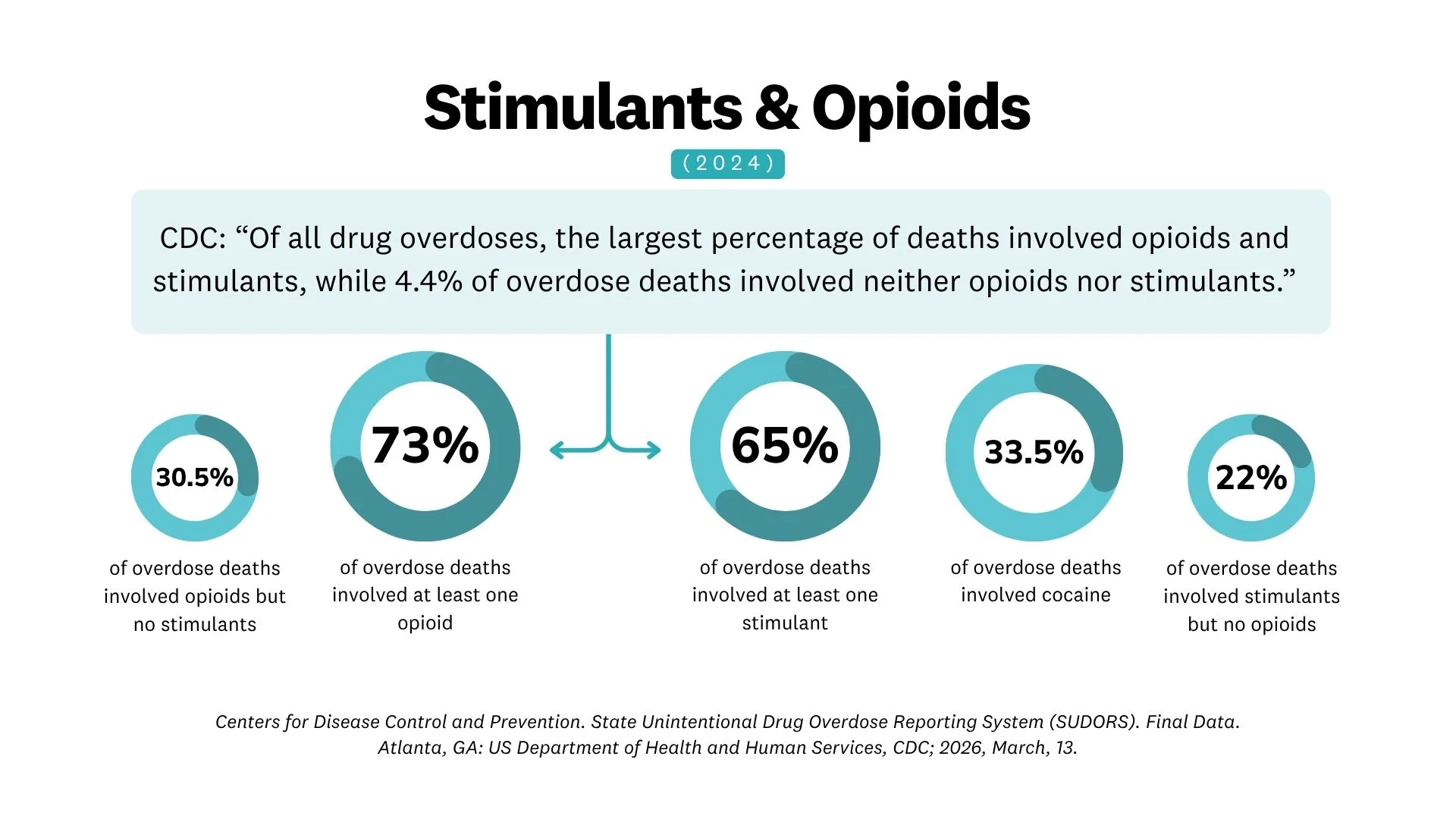
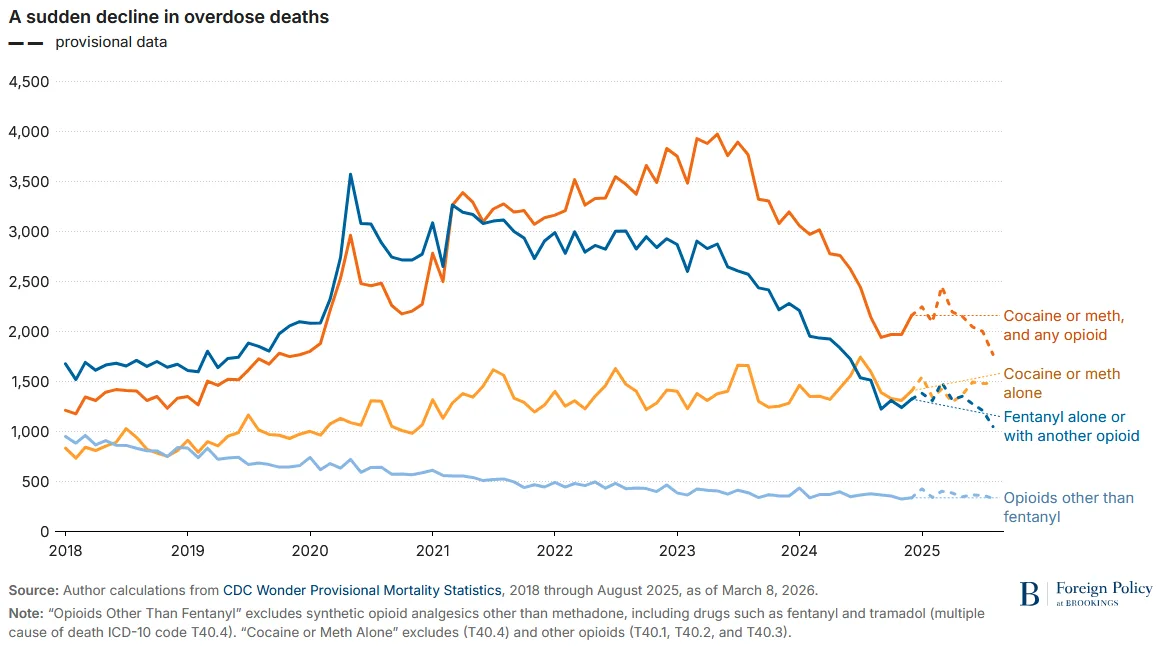
These shifts have required discussions about overdose prevention methods that acknowledge the dangers of mixing substances intentionally, while putting even more importance on recognizing that many substances are not what they seem within the illicit market. What is intended to be a stimulant may also contain a potentially dangerous amount of an opioid such as fentanyl, so it’s important to be prepared to prevent and respond to an opioid overdose with naloxone even when opioid use is not intended.
There is still much more to share and understand about this evolving phase of the overdose crisis, but these trends offer an important place to begin. The recent decline in overdose deaths shows that progress is possible, but sustaining it will require continued attention, investment, and action. Each of us has a role to play in ensuring that fewer lives are lost and that people, families, and communities have the support they need.
Learn More
-
International Overdose Awareness Day: “25 years on. Still needed.”
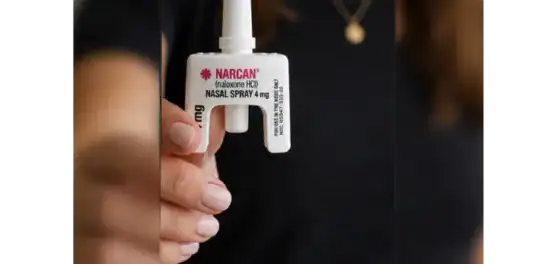
On International Overdose Awareness Day (IOAD), we can transform grief, memory, frustration, and hope into action while recommitting to do so until we reconvene next August 31st.
-
SAFE Project Response to HHS Request for Comment on Chronic Disease of Addiction
SAFE Project submitted the following letter outlining actionable steps the Department could take to improve the prevention, treatment, and recovery of substance use disorder and mental illness within their Great American Recovery Initiative.
-
Empowering Student Voices Through Science, Prevention, and Storytelling

As part of the Mental Health and Substance Use Prevention Course, selected high school and undergraduate students explored harm reduction, overdose prevention, stigma, recovery pathways, and categories of prevention (primary, secondary, tertiary). They then translated that learning into original projects rooted in research, creativity, and personal insight.
