

SAFE Communities partners with systems and organizations to help reduce stigma around addiction, recovery, and harm reduction.
For more than three decades, HIPS has been a steady presence in Washington, D.C. They’re an organization focused on community care and overdose prevention, working primarily alongside sex workers and people who use drugs, communities that are too often pushed to the margins. Their work is grounded in meeting people where they are, both geographically and personally, with an approach shaped by trust and care.
We spoke with Johnny Bailey, HIPS’ Hot Spot Manager, about what that commitment looks like on the ground. In his role, Johnny oversees outreach efforts, coordinating frontline teams and helping ensure that essential supplies and referrals reach people in real time. Our conversation explored how relationships are built slowly and intentionally, and what it takes to foster safety and dignity within a landscape defined by stigma and criminalization.
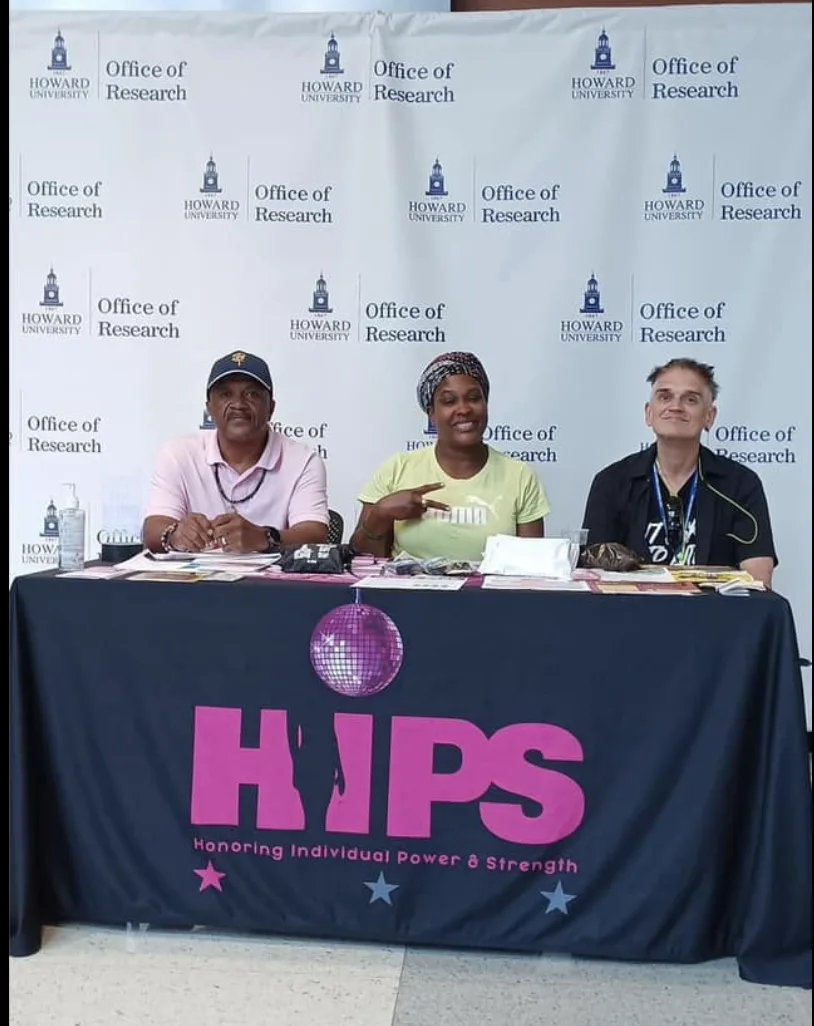
For folks who may be newer to HIPS, how do you describe your mission in plain language? What problem are you trying to solve, and how do you know when you’re doing it well?
Our mission can be summed up very simply as “keeping people alive.” We work toward any positive change. And we know it’s working when we see a decline in overdoses. At my site in Shaw, we’ve had a 47% reduction in fatal overdoses since opening the pop-up. We also measure when HIV transmissions go down, and whenever a client moves toward a goal that matters to them. That goal might be joining a support group, entering recovery, getting housing, or even just using clean supplies.
I always say my support groups have a 100% success rate, because everyone who attends regularly has changed in some positive way. For some people, that looks like joining a group, staying sober, getting housed, volunteering, and eventually getting hired as a peer. One person even moved into a salaried position. For others, success looks different. One client I have still uses, but no longer lies to their partner about it.
Substance use disorder isn’t a black-and-white choice between abstinence and chaos. There’s a whole spectrum, and labeling people as failures for not achieving complete abstinence is damaging and often discourages them from continuing to try.
What does community care actually look like on the ground at HIPS on an average day?
When I interviewed for this job, I asked my usual interview question: “What does an average day look like?” The interviewer laughed. Now I understand why, there’s really no typical day.
A day like today started with a team meeting, then we opened for services at 2 PM. We helped people get hats, coats, blankets, and thermal gear. I connected one person to medication support, helped another with TANF, and worked with someone else on housing. We made sure everyone had information about where they could stay warm tonight.
Our team checked in at a daycare and an elementary school at opening and closing to help ensure safer pick-ups. People came in for coffee, tea, water, to use the phone, or the bathroom. At 5 PM we hosted a grief support group, at 6 PM a SMART Recovery group, and earlier in the day we had a recovery group run by our Certified Addiction Counselor (CAC).
We also responded to a call about needles on the ground and swept the area to make sure it was clear and safe for the kids. Today was relatively calm, but even on calm days you’re supporting many different people with many different needs, and it can change at any moment.
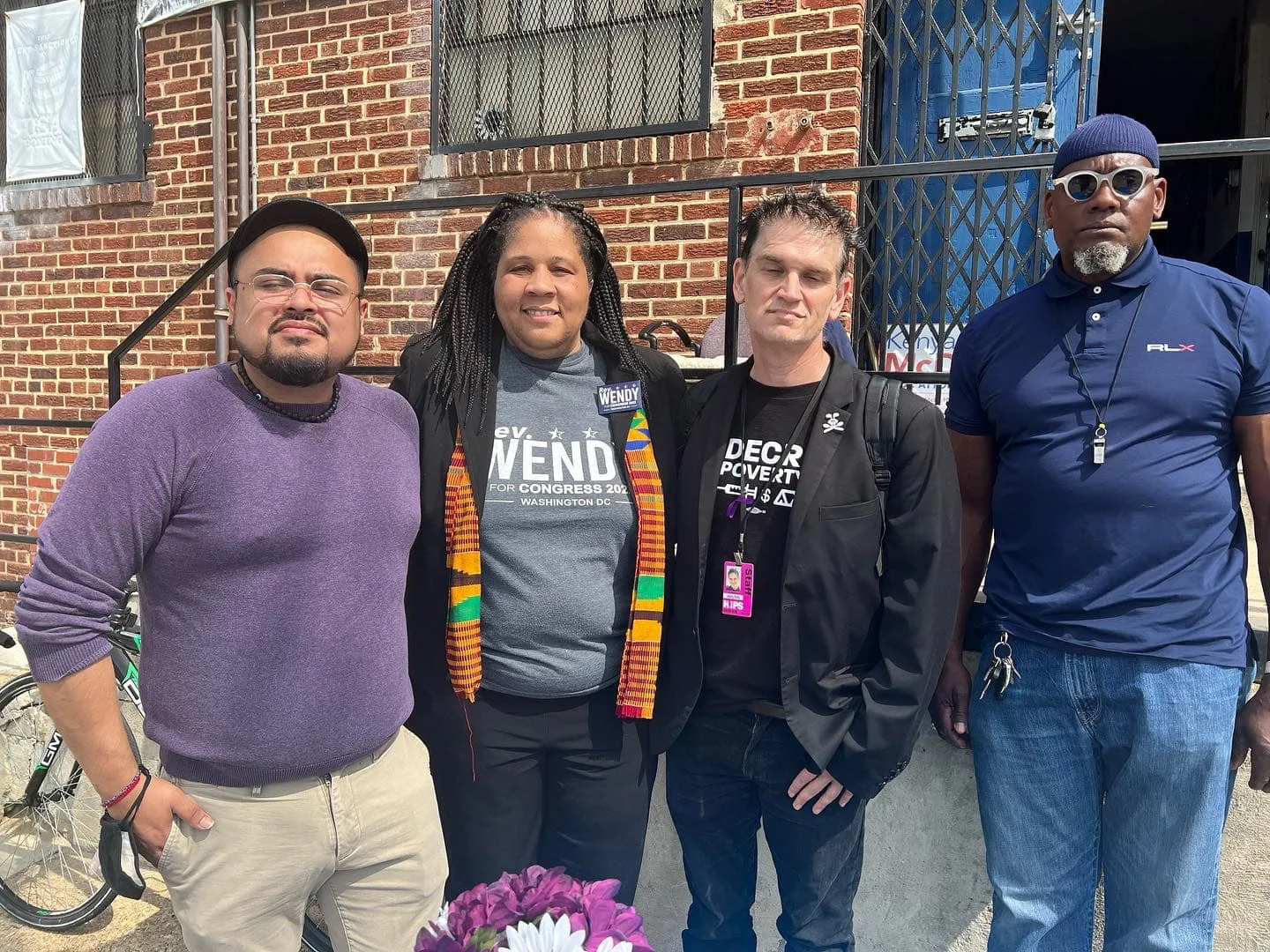
We act as a conduit between people and services. We can’t do everything ourselves, but we function as triage. We know who can do what we can’t. We work with partners, provide testing and referrals, and offer a phone, a place to wait or meet, and professional guidance through systems that are difficult to navigate even with the privilege of stable housing and a working phone.
HIPS works with people who are often excluded from “acceptable” narratives of recovery or safety. What do you wish more policymakers, funders, or even community members understood about your clients?
More than anything, I want people to see the humanity in the communities we serve. These aren’t statistics or people to be avoided on the street. They are human beings, many of them incredibly intelligent and capable of doing great things. For most, circumstances changed their trajectory.
The “pull yourself up by your bootstraps” narrative almost always comes from someone who had more privilege than they realize. People need to seriously ask themselves how their life might look if their father was incarcerated for life, their mother died by suicide, they were on the streets at a young age, became addicted before they fully understood what was happening, or developed serious health issues. I know people who experienced all of that at once.
I have a client who was exonerated after 16 years in prison for a crime he proved he didn’t commit. What does your life look like after that? Many of our clients –and staff– are incredible people in impossible situations that are hard for others to comprehend.
People also don’t choose addiction. About 75% of people who meet DSM criteria for substance use disorder in college no longer meet those criteria a few years later. That remaining 25% was often doing exactly what their peers were doing, it just went differently. Society is better when we help people rather than punish them, but there’s a large part of this country that will spend more money making sure someone has less simply because they’re afraid someone else might get help more easily than they did.
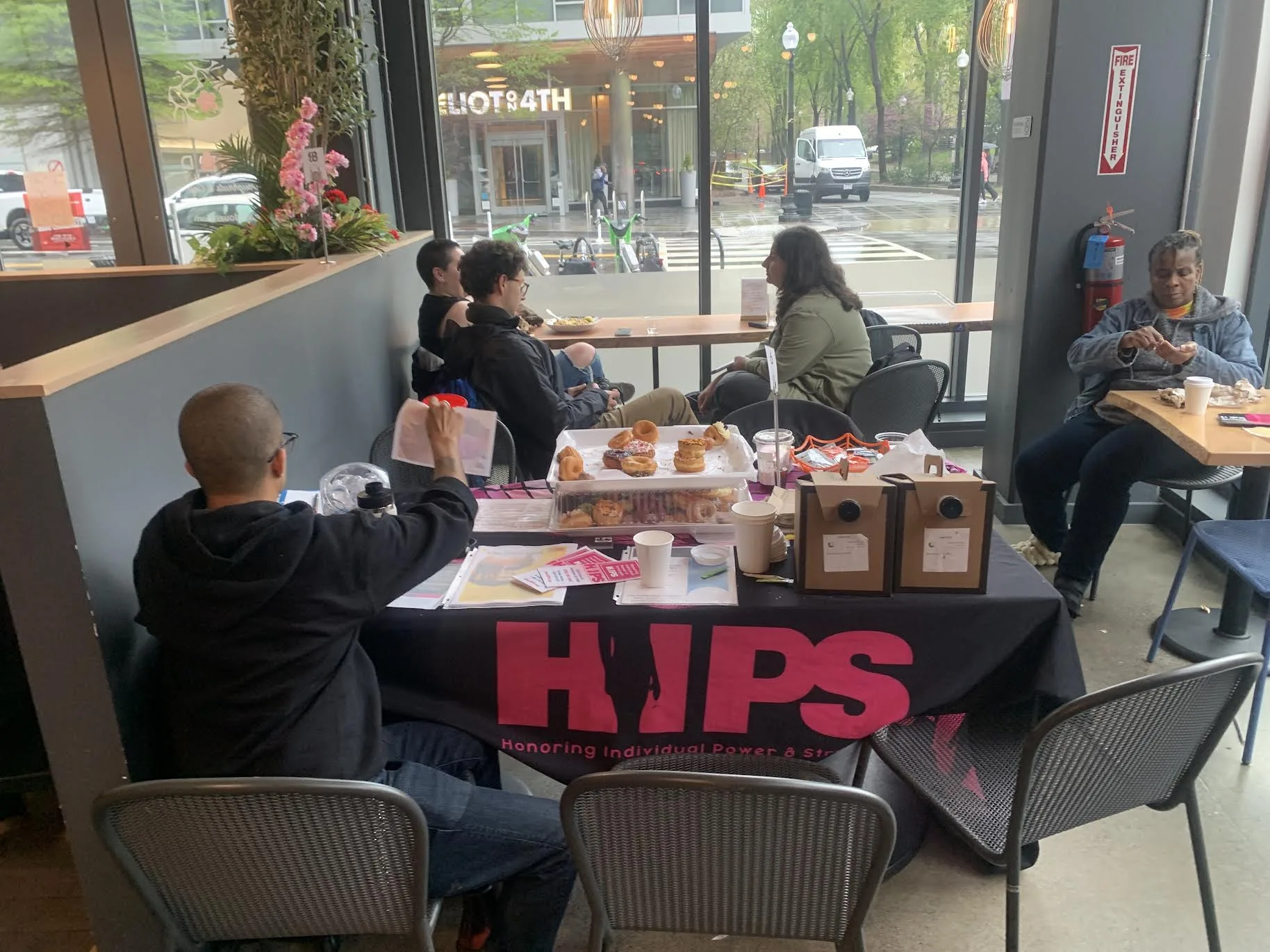
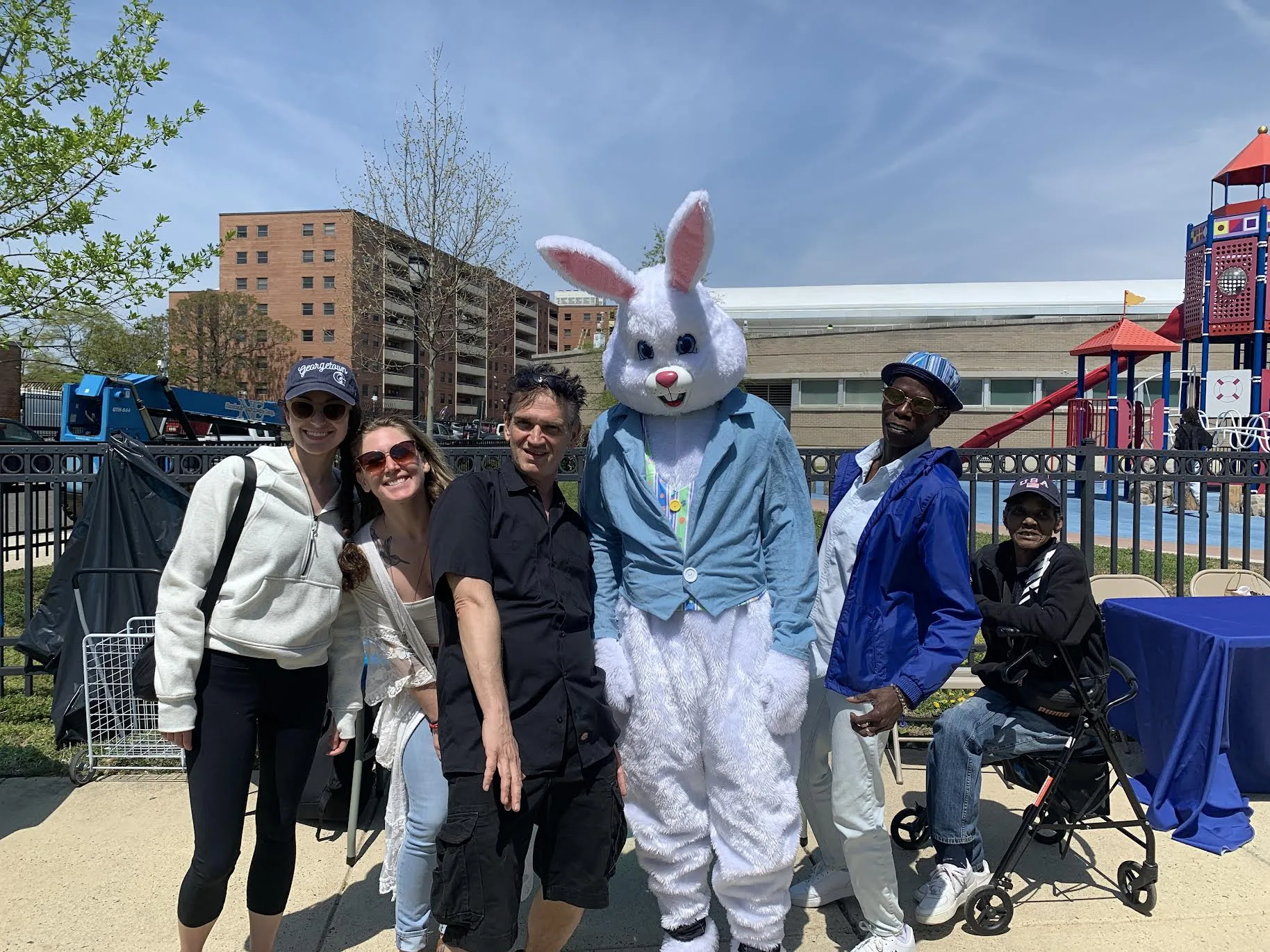
How does HIPS define success when abstinence or “completion” isn’t the goal?
Success is any positive change. People who participate in needle exchange programs are about five times more likely to enter recovery and 3.5 times more likely to switch from injecting to other methods. I don’t have the most recent data, but given the fentanyl era, I’d be shocked if those numbers weren’t even higher now. Both outcomes are successes.
When people join my recovery group, I don’t assume abstinence is their goal. I ask. Then I give realistic guidance. Recovery is deeply personal, and abstinence-only programs can do real harm. I’ve had someone kicked out of a methadone program for testing positive for marijuana, and I’ve seen others pushed out of groups for similar reasons.
In my mind, if someone was injecting a gram a day and is now having a beer after work, that’s recovery. Success also looks like fewer fatal overdoses. When I last testified before council, they told me it was the daycare parents who used to call constantly with complaints. But now they never do. We’ve connected dozens of people to housing, tested many and gotten them on PrEP, PEP, or into HIV treatment, helped people access Hep C care, and connected people to primary care providers in the area. Anything that moves someone closer to their goals or makes them safer is success.
This work is heavy and often invisible. What keeps you grounded or coming back to it on the hardest days?
This is deeply personal for me. I’ve lost many friends to overdoses. People I grew up with, here one day and gone the next. I’m also a recovering addict, and harm reduction, SMART Recovery, and this organization gave me a chance at life.
Twelve years ago, I was living in a squat on Rhode Island Avenue with four other people. I was separated, unemployed, and had a tenth-grade education. Now my marriage is reconciled, I have a degree in social work, a career, and my spouse and I bought a house. I’ve testified, helped change policy, and done work with people who would never have listened to me a decade ago. The biggest reason I can do this is simple: I didn’t die or go to prison.
I recognize that I had certain privileges that made this possible and that many people don’t. I also know there were things that could have helped me much earlier. My goal is to help others access the same chances I had and to build the things I wish had existed for me.
When I was in rehab, discovering SMART Recovery was a turning point. The all-or-nothing disease model never worked for me. According to that model, the alternatives were jail, institutions, or death. I’d already tried two out of three. SMART led me to Rational Recovery, SOS, HAMS, and other options, and it became my passion to make sure people knew they had choices.
Right out of school, HIPS supported my vision. We created panels and events, and they allowed me to help people in ways that others weren’t ready to talk about yet. The work is heavy, but my life has always been heavy. Now, at least, I feel like I can help others build something better. And I’m surrounded by people who understand, who care, and who are moving in the same direction.
For people reading this who want to support the work HIPS is doing, what are the most meaningful ways community members can get involved right now, whether that’s time, resources, or advocacy?
I’ve always said HIPS has the formula. I bring my experience and knowledge, but I’m standing on 35 years of institutional and lived experience. What we lack is capacity, money and staff to scale what works. That challenge has only grown with more barriers and fewer resources on the other side.
Honestly, advocacy matters enormously. Call your councilmember, your Business Improvement District, and anyone with power in your community. Push for more resources where you live.
I manage two hotspots, both with clear, measurable success, and we want to replicate these highly localized, targeted, holistic models everywhere. All of our programs are struggling for funding and staff. Donations mean the world, but advocacy is how we’ve survived and continued to grow.
Learn More
-
Letter from the Senior Director of SAFE Communities

At SAFE Project, our Communities initiative exists at the intersection of policy, practice, and people. Our work is focused on strengthening the bridges between prevention, harm reduction, treatment, recovery, and reentry. From the SAFE Communities Director Rachel Bowling Hello, and happy March! I’m Rachel Bowling, the new Director of the SAFE Communities Initiative at SAFE
-
Prevention Spotlight: Nina P.
About Nina Meet Nina, one of SAFE Project’s Youth VOICE Council members. Nina resides in Texas, with a passion for self-reflection and spreading the importance of taking care of your mental health. Check out her thoughts about how she uses prevention practices on a daily basis and leans on certain rituals to overcome challenges. Why
-
Spotlight for Prevention Month: Robin Todd — Founder of Mindful Momentum
Discover how Robin Todd, founder of Mindful Momentum, is redefining recovery and workplace wellness through mindfulness. Her “Building Strong Minds” program and peer-based tools help workers reduce stress, prevent crisis, and create a culture of safety and support.

