
International Overdose Awareness Day is observed each year on August 31. It is a time to remember the people we have lost, support those whose lives have been changed by an overdose, and turn awareness into action.
This year, there is real progress to recognize. Final CDC data show 79,384 drug overdose deaths in the US in 2024. The age-adjusted overdose death rate declined by 26.2% from 2023, representing the largest one-year decrease ever recorded. More recent provisional data predict 68,641 deaths during the 12-month period ending in February 2026, a 12.1% decrease from the prior 12-month period.
These declines are significant, but tens of thousands of preventable deaths still occur each year.
Progress is a reason to strengthen what works, not step away from it. It is also a reminder not to step away when an overdose may be happening in front of us.
Greater awareness and education are essential parts of that response. Overdose is not an abstract public health issue. It can happen in any community, and anyone can learn to recognize it and respond. In fact, CDC data show that a potential bystander was present in nearly 43% of overdose deaths in 2023, underscoring how often another person may have an opportunity to intervene. That person could be a friend, family member, coworker, neighbor, or stranger.
When more people know the signs of an overdose, carry naloxone, and understand how to respond, more people are prepared to act during those critical moments.
With that in mind, here are six things everyone should know about overdose:
An overdose occurs when a person has more of a drug, or a combination of drugs, in their body than it can safely process.
The substance can disrupt essential functions such as breathing, heart rate, body temperature, and consciousness.
Overdose can involve opioids, stimulants, alcohol, benzodiazepines, or other substances. The signs and appropriate response can differ depending on what was taken.
Risk is not limited to people with a diagnosed substance use disorder or who use drugs regularly. An overdose can happen to:
- Someone using a substance for the first time
- Someone taking medication differently than prescribed
- Someone returning to use after a period of not using
- Someone unknowingly taking a counterfeit pill or a substance containing fentanyl.
It can also happen when substances are mixed or when the strength of a drug is different than expected.
In today’s unpredictable drug supply, anyone who uses drugs may be at risk, regardless of how often they use or whether they identify as having a substance use problem.
Know the Signs of an Opioid Overdose
An overdose can happen to anyone, and knowing how to respond can make all the difference.
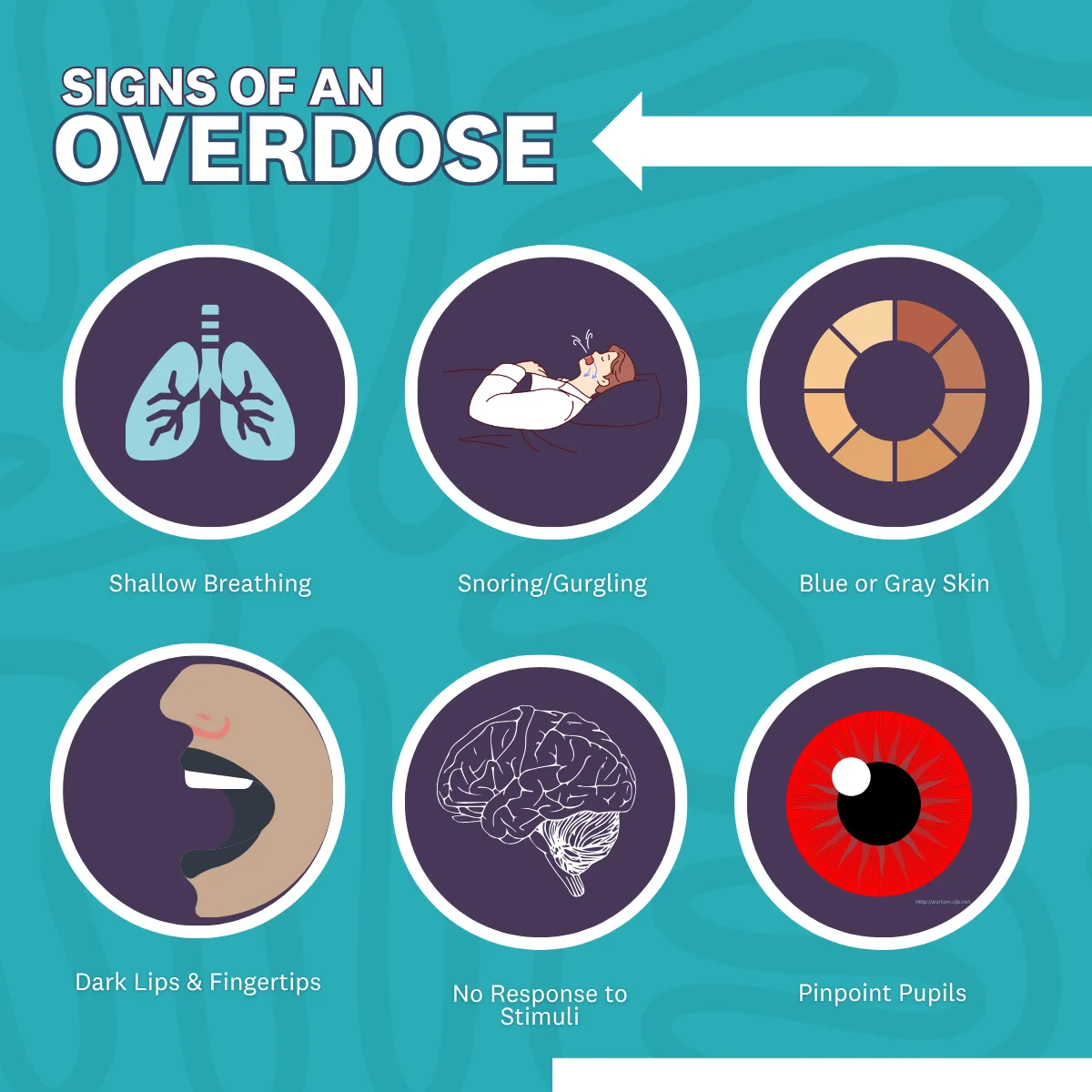
Do not assume a person is simply sleeping. If you are unsure, try to wake them, check their breathing, and respond. Calling the person’s name, rubbing your knuckles firmly on the center of the chest, or pressing on a fingernail can help you check responsiveness without wasting critical time.
Opioid overdose can be fatal or nonfatal.
A person can survive an overdose, especially when someone recognizes it quickly and takes action. Yet surviving does not always mean escaping harm. A prolonged lack of oxygen can cause brain injury, heart or kidney problems, nerve damage, aspiration pneumonia, and other complications. Every suspected overdose deserves medical attention.
Nonfatal overdoses are also far more common than fatal overdoses. One national analysis of drug overdoses from 2010 through 2020 estimated approximately 15 nonfatal overdoses for every fatal overdose.
The true number is difficult to measure because many overdoses never reach an emergency department or appear in official records. Each nonfatal overdose is both a serious health event and an opportunity to offer naloxone, evidence-based treatment, harm reduction services, peer support, and compassionate follow-up.
Overdose deaths are mostly driven by misuse of opioids, often in combination with other drugs like benzodiazepines, stimulants, and alcohol.
Opioids, especially illicitly manufactured fentanyl, continue to drive a large share of overdose deaths, but many deaths involve more than one substance. People may intentionally combine substances, or they may be exposed without knowing it because fentanyl and other substances can appear in an unpredictable drug supply.
CDC data illustrate how much substances overlap. Among overdose deaths recorded from January 2021 through June 2024, 59.0% involved stimulants, and 43.1% involved both stimulants and opioids.
Alcohol and benzodiazepines can also sharply increase danger when combined with opioids because each can suppress breathing.
This is why it is important to avoid using alone, carry naloxone, start with a smaller amount when the contents or strength are uncertain, avoid mixing substances, and use drug-checking tools where they are available.
Naloxone will not reverse a stimulant, alcohol, or benzodiazepine overdose, but it should still be given when opioid involvement is possible. It will not harm someone if opioids are not present.
Opioid deaths are preventable. Anyone can save a life with naloxone.
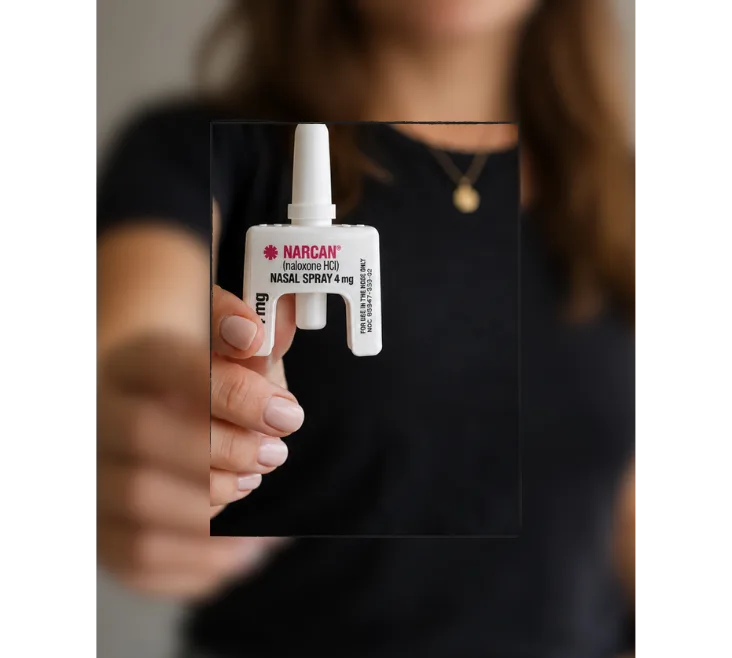
Naloxone is a safe medication that temporarily reverses an opioid overdose by restoring breathing. It is available as a nasal spray and in injectable forms. You do not need to be a medical professional to use it.
If you suspect an opioid overdose:
- Call 911 immediately. Say that the person is unresponsive and not breathing normally. Follow the dispatcher’s instructions.
- Give naloxone. Administer the first dose as directed. If the person does not respond after two to three minutes, give another dose if one is available. There is no harm in giving multiple doses to a person.
- Support breathing. Give rescue breaths or CPR if you are trained, or follow the 911 dispatcher’s directions.
- Stay with the person. Place them on their side if they begin breathing and monitor them until emergency help arrives. Naloxone can wear off before the opioids do, so symptoms can return.
Naloxone is a safe medication that temporarily reverses an opioid overdose by restoring breathing. It is available as a nasal spray and in injectable forms. You do not need to be a medical professional to use it.
Awareness to Action
On Overdose Awareness Day, we remember every person lost and honor the grief carried by families, friends, and communities.
We also recommit to what saves lives: accurate information, naloxone in more hands, evidence-based care, practical harm reduction, and human connection without judgment.
Learn the signs. Carry naloxone. Talk openly about overdose. And if you see someone who may be overdosing, act. Your response could give that person the chance to recover, reconnect, and live.
Learn More
-
Prevention Point: The Supports We Need to Thrive: Protective Factors at the Community and Societal Level

This Prevention Point explores how community and societal protective factors, from supportive schools and neighborhoods to accessible resources and healthy policies, shape our well-being. It also highlights everyday ways we can help build stronger, more connected and resilient communities.
-
Recovery in College: Finding a College with Support that’s Right for You

This SAFE Project resource is designed to help students and their families navigate that deeply personal decision. It complements existing tools–such as the Association of Recovery in Higher Education’s (ARHE) Collegiate Recovery Directory – by offering questions and considerations that help students understand what collegiate recovery support looks like in practice.
-
Prevention Point: Connections Matter – Relationships as Protective Factors

Discover how positive relationships strengthen resilience, reduce stress, and support mental wellbeing. This resource explores the power of connection and includes a downloadable worksheet to help you build and strengthen supportive relationships.
