

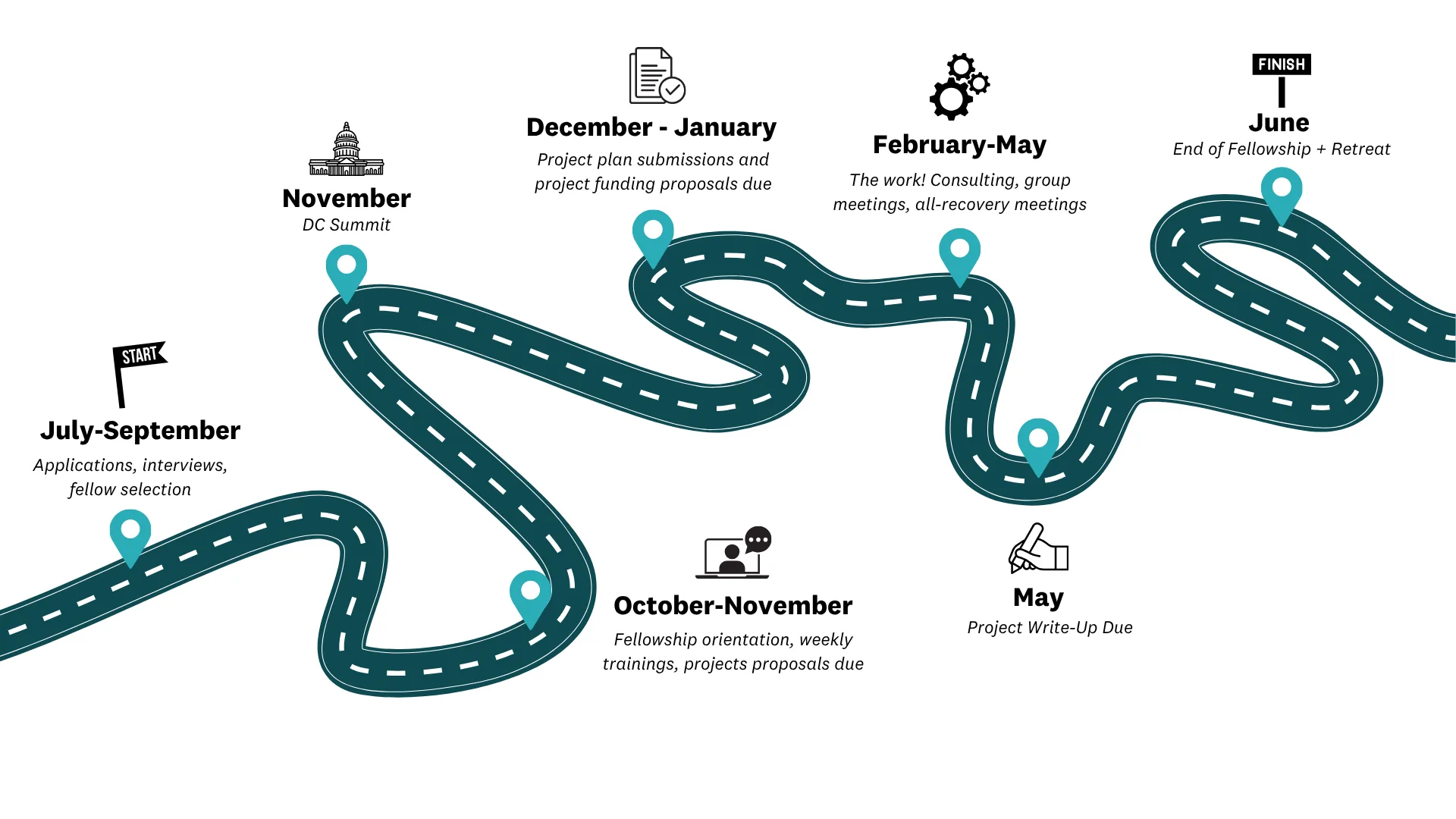
Through an academic-year-long fellowship, the CRLA empowers students to develop leadership skills, deepen their understanding of addiction and recovery, and implement impact projects that create meaningful change in their communities.
What started as a leadership development initiative has grown into a national community of student advocates who are shaping the future of recovery and overall well-being in higher education.
Who are Our Fellows?
The first eight cohorts of the CRLA, comprising 321 students from 170 campuses, reflect the diverse experiences of students’ lives.
- 46% of Fellows identify as a minority or person of color
- 32% of applicants identify as LGBTQ+
- 36% of applicants report a history of homelessness
- 34% of applicants are system-impacted
- 8% of applicants are veterans
- 11% of Fellows attend community colleges
- 34% of Fellows attend Minority Serving Institutions
CRLA Fellows bring lived experience, leadership, and perspective that strengthen both the program and the campuses they serve.
Program Goals
The CRLA is intentionally designed to bridge personal development with systems-level impact. The program prioritizes both students’ personal growth and campus change through three core goals:
- Strengthen Student Well-Being and Recovery: We aim to make a positive impact on fellows’ lives by supporting their well-being and recovery and fostering a supportive community.
- Develop Student Leaders: Through experiential learning, Fellows explore the addiction epidemic, recovery advocacy, and servant leadership principles. Participants leave the program with skills and confidence to lead change in their communities.
- Positively Impact Campuses: Each Fellow designs, plans, and implements an impact project focused on campus substance use or mental health prevention, harm reduction, recovery support, or stigma reduction. The projects translate learning into action and empower students to contribute to campus culture change.
Impact Across the First 7 Cohorts
The impact of the CRLA is both individual and collective–extending from Fellows themselves to entire campus communities.
Our first 321 CRLA Fellows have:
- Represented 170 campuses
- Reached 41,148 individuals through prevention, harm reduction, and recovery initiatives
- Recruited 1,191 students into collegiate recovery programs and communities
- Raised $250,404 to support collegiate recovery initiatives
- Distributed 6,090 fentanyl test strips
- Distributed 5,565 units of naloxone
These outcomes reflect the power of student-led change. When students are afforded the tools and trust to lead, they create and implement solutions that resonate with their peers.
Higher Education Culture Shift
Beyond the numbers, the CRLA offers insight into how student perspectives–and campus cultures–are evolving.
Over the years, several themes have become evident:
Students Want to Be Part of the Solution
Students are not passive recipients of prevention messaging–they want meaningful roles in shaping the field. Projects often include goals such as creating or expanding collegiate recovery support, reducing stigma, or advancing harm reduction practices.
Students are Embracing Holistic Recover
There is a growing awareness of recovery that includes mental health, community, purpose, and overall well-being. This trend is accompanied by a greater acceptance of multiple pathways and the ability to hold multiple truths simultaneously.
Collegiate Recovery’s Role is Expanding
Recovery initiatives are no longer viewed solely as support services; they are becoming centers of leadership, advocacy, and campus culture change. At the same time, students are identifying gaps in traditional approaches and pushing institutions to respond to emerging needs.
Student Perspectives on Addiction are Evolving
Students lead by example, moving away from stigma and toward compassion. They see addiction as a complex issue impacted by social conditions, mental health, and trauma.
Harm Reduction and Autonomy are Priorities
Students advocate for practices that prioritize safety, autonomy, and meeting people where they are. These include naloxone distribution and safer use education.
Students have Higher Expectations of Each Other
Fellows want a culture of shared accountability and care, where they feel safe challenging one another to grow and approaching one another with empathy.
Committed to Multiple Pathways of Recovery
This shift is grounded in a strong commitment to inclusivity across recovery experiences.
94% of Fellows strongly agree* with the following statement:
I celebrate any form of recovery, even if it’s a form of recovery I disagree with.
*The remaining 6% agree with the statement.
This shared commitment highlights how the fields of collegiate substance use prevention, harm reduction, and recovery–and their emerging leaders–are advancing person-centered, inclusive, and pragmatic responses to the addiction crisis.