

“Prevention isn’t about scaring kids. It’s about giving them information without shame.”
When the Prevention Empowerment Partnership (PEP) was asked to deliver a prevention presentation during COVID, the request was familiar. The response was not.
In a recent interview, we sat down with three individuals representing the Prevention Empowerment Partnership (PEP): Angela “Angie” Saunders, Director; Tabetha “Tabby” Blevins, Deputy Director; and Brooklyn Johnson, youth leader, prevention specialist, and co-author of Dragon’s Learning Adventure.
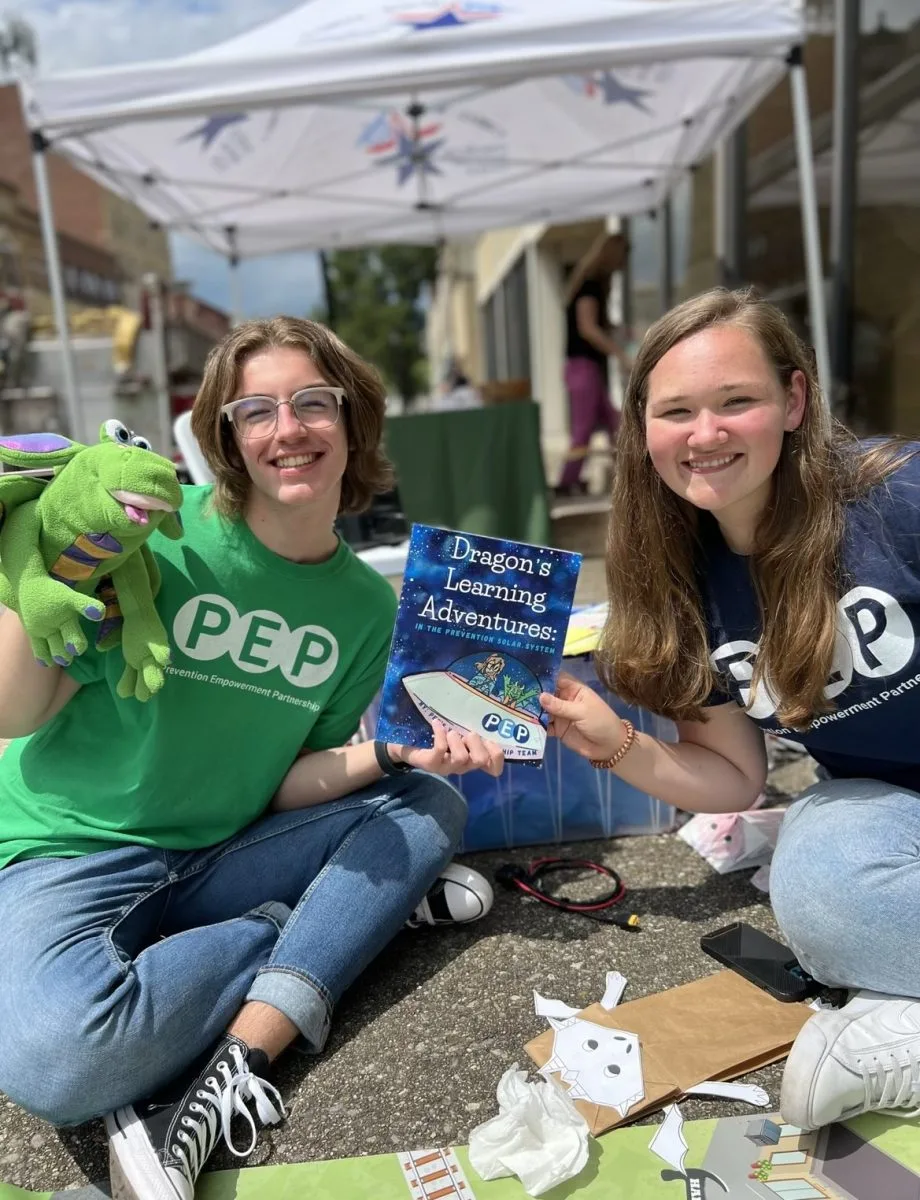
Together, they shared how a youth-led prevention project grew into a nationally requested resource and what it looks like when young people are trusted to lead meaningful, stigma-free prevention work.
“People reached out to staff like they always do,” said Angie Saunders, Director of PEP. “And I said, how about we let the kids do it?”
That moment set the tone for everything that followed.What began as a virtual youth-led presentation grew into Dragon’s Learning Adventures: IN THE PREVENTION SOLAR SYSTEM, a children’s book written, illustrated, edited, and brought to life by young people. Today, it’s used in schools, libraries, community centers, faith-based spaces, and prevention programs, and is now available nationally through Amazon.
At its core, the book reflects PEP’s philosophy: prevention is strongest when young people are trusted, trained, and given real ownership. Prevention isn’t about scaring kids. It’s about giving them information without shame”, said co-author, Brooklyn Johnson.
“Our number one goal is substance prevention,” Saunders said. “But in everything we do, we empower youth. We try to make them the center of everything.”
Built by youth, guided by adults
PEP operates under Marshall University’s Center of Excellence and has built a layered youth empowerment model that includes high school youth leaders and college trainees. Tabetha “Tabby” Blevins, Deputy Director of PEP, works closely with those groups as they develop projects, including the book.
“I don’t personally do a lot other than guide them and direct them where they need to go,” Blevins said. “They do so much of the work. They’re incredibly creative, but they’re still learning, so they need that adult guide. Angie does the same. We make a good team.”
That balance of guidance without control is intentional. Youth at PEP are not treated as mascots or spokespeople. They research, revise, test ideas, and present publicly, often to audiences far older than they are.
“We train them like adults,” Saunders said. “And then we give them the mic and back up.”
A book that started with a gap, not a pitch
For Brooklyn Johnson, one of the original youth leaders behind Dragon’s Learning Adventures, the project grew from the request that was made during covid for a youth presentation on substance prevention and out of something she noticed early on.
“We saw a gap in elementary school prevention,” Brooklyn said. “We believe that as soon as you can walk and talk, you can have prevention.”
At the same time, she was navigating her own experience as a young person with substance use disorder in her family.
“What really led to creating this book was wanting to be preventative, but also to humanize substance use,” she said. “I wanted kids to understand that if your parent smokes or drinks, that doesn’t make them a bad person.”
That message was non-negotiable for the youth team.
“When we got to the tobacco planet, the kids were very adamant about this,” Blevins said. “They wanted to make sure we weren’t making kids feel like their parents were terrible. There’s actually a conversation in the book where the dragon asks, ‘My mom smokes. Does that make her bad?’ And the answer is no. It’s about having more information so you can make healthier decisions.”
From video idea to published book
The project didn’t start as a book at all.
“It was originally written as a script for a video,” Brooklyn said. “I was going to play myself, so the character was named Brooklyn, and my co-writer was going to be the dragon.”
When the project shifted to print, Brooklyn hesitated.
“I remember saying, ‘Is this weird? Is it egocentric?’” she said. “And everyone told me to keep it. I’m really glad I did. It’s one of my biggest achievements.”
Youth handled nearly every aspect of the production: writing, editing, illustration, and even companion materials like posters, stickers, and a dragon puppet used during readings.
“One of our youth is a beautiful artist,” Saunders said. “They illustrated it. They edited it. They created the stickers. This is truly theirs.”
Evidence-informed, not just “feel-good”
Letting youth lead didn’t mean anything went unchecked.
“One of the key things is guiding them back to the science of prevention,” Saunders said. “Sometimes imaginations get carried away. We don’t say no. We say, ‘What’s the issue with that?’ Then they go research it.”
That process mattered.
“We don’t want to put PEP’s name on anything that isn’t evidence-informed,” she said. “This book went through that process, and I think it actually created more ownership.”
The book follows Brooklyn and her dragon buddy through space, with each planet focused on alcohol, tobacco, or medication safety.
Each planet includes a lesson about its respective substance.
On the Planet of Medication Safety, readers learn the importance of safe prescription medication use. Though the lesson on this planet alludes to medication looking like candy, it clearly illustrates not all medications are safe for everyone, and that decision is made with trusted adults.
Next, we learn how alcohol may affect the body and brain. PEP also takes this moment to emphasize that, though the legal drinking age in the U.S. is 21, brain development and prevention research shows 25 is the safer age to make decisions about alcohol use.
Finally, the Planet of Nicotine Safety teaches readers of the risks that accompany nicotine use. A lesson learned on every planet is that substance use isn’t about being right or wrong, it’s about empowering people with tools and awareness to make safe choices for themselves.
“Our target is probably first through third grade,” Blevins said. “But we’ve read it to preschoolers, and they love it. One little girl came back three times just to listen again.”
Blevins shared another moment that stuck with her from home.
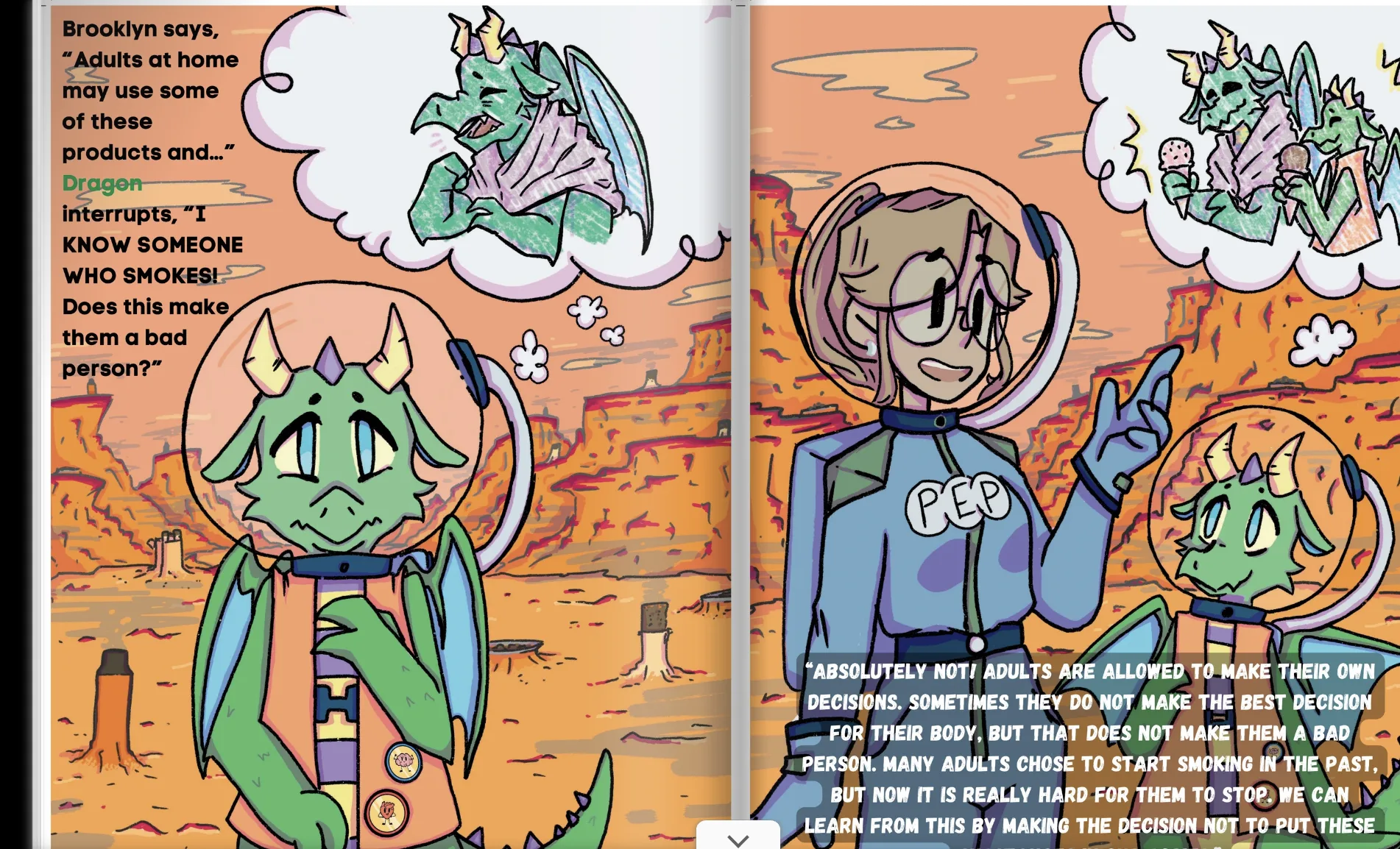
“My son asked, ‘They’re in outer space. Why don’t they have helmets on?’” she said. “Then we got to the tobacco planet and they did have helmets. That opened a whole conversation about smoke and breathing. The kids thought of that detail.”
Saunders added that the experience changes depending on who’s reading.
“There’s a big difference between us reading it and hearing our kids read it,” she said. “They are so animated. They read it like they’re reading to preschoolers, because they are.”
From pushback to buy-in
Brooklyn remembers that early resistance didn’t come from children.
“There was some pushback from adults,” she said. “People worried that talking about substances would encourage use, or that it was too much for kids.”
That shifted quickly.
“Once they actually read the book, the concerns went away,” she said. “It’s very clearly written for kids. We’re not introducing anything extreme.”
And once it’s in front of children?
“The kids are super perceptive,” Brooklyn said. “Everyone loves the little dragon.”
The work of these young prevention minds hasn’t been limited to classrooms and libraries. The youth-led approach behind the book has also shaped how PEP collaborates with national prevention partners.
SAFE Project first connected with PEP in late 2021, leading to joint work with PEP leadership and youth members on short, youth-driven fentanyl education videos. That collaboration continued the following year when SAFE Project supported PEP’s annual youth conference, where young leaders presented the No Shame Pledge through skits and interactive workshops, demonstrating the same youth ownership and stigma-free messaging reflected throughout the book.
More than a book: an experience
Readings are usually paired with activities designed by youth.
“One of my favorites is a science activity,” Brooklyn said. “The kids build rocket ships with vinegar and baking soda, write their dreams on the bottle, and launch them to the moon with Dragon.”
For PEP, the book also serves another purpose: it teaches older youth by having them teach younger ones.
“You learn more when you teach it,” Saunders said. “Every time our kids read the book, they’re learning too.”
Training youth means trusting them
PEP’s youth don’t just read books. They present at conferences, speak with legislators, and lead community programming.
“I’ve had people tell me, ‘I don’t think our kids could do that,’” Saunders said. “And I always say, ‘Why don’t you ask them?’”
She recalled a moment when one of their youth members stepped for Tabby to finish a presentation who had an emergency and was pulled away.
“She stood up and did it better than I could have as if that was the plan from the beginning,” Saunders said. “That’s when you know your kids are trained.”
Blevins sees the difference ownership makes.
“If kids don’t have ownership, they don’t want to be there,” she said. “They don’t want to just be a face. They want to be part of the organization.”
Brooklyn’s biggest takeaway
For Brooklyn, the project reshaped how she sees herself.
“We took little steps,” she said. “I didn’t realize it would become a published, professional-looking book that’s sold on Amazon. It gave me confidence I didn’t have before.”
Now in medical school and planning to become a pediatrician, she carries prevention with her.
“I want to bring prevention into pediatrics,” she said. “I want kids to understand early that substance use disorder is a disease, and that they’re not responsible for it.”