

“We have to recognize that we need to push for more prevention, awareness, and also overdose recovery,” she said.
When So Eun Kang first noticed naloxone sitting beside the tables in a research lab at Case Western Reserve University, she had a simple question for her mentor: What is this?
She learned that naloxone is a medication that can reverse an opioid overdose. What surprised her was not only what the medication could do, but that she had never heard about it before.
“Not at school. Not in health class. Not alongside the other emergency response tools young people routinely learn about.
For So Eun, now a rising senior at Beachwood High School in Cleveland, Ohio, that moment became one of many small experiences that would eventually shape her into a passionate prevention advocate and member of SAFE Project’s Youth VOICE Council.
Her story is a fitting one for National Substance Use Prevention Month because it demonstrates something easy to overlook: meaningful prevention work does not always begin with a major campaign, a policy proposal or even a clear plan.
Sometimes, it starts with a single step: ask a question.
Seeing the Issue Differently
So Eun’s interest in substance use and overdose prevention developed through several experiences.
An incident involving someone connected to her sister’s university community first made the issue feel much closer to home. Later, through a research program at Case Western Reserve University, So Eun studied how opioids can affect immune cell death and dysregulate the immune system. The experience gave her a scientific perspective on substances that went beyond what she had previously understood about addiction and overdose.
It also made her think differently about prevention.
“We have to recognize that we need to push for more prevention, awareness, and also overdose recovery,” she said.
That curiosity eventually led her to SAFE Project and its Youth VOICE Council, where young people from across the country can collaborate on substance use prevention, stigma reduction and overdose response initiatives.
And that is where curiosity began turning into action.
From Pharmacy Visits to School Policy
Eventually, So Eun began thinking about naloxone access in the place closest to her: her own school.
At a wrestling tournament at another school, she noticed an emergency naloxone box mounted beneath an AED. It raised an obvious question: Why couldn’t naloxone be similarly visible and accessible at her school?
So Eun decided to bring the idea to her school board.
Getting there took persistence. The meeting was pushed back until May, near the end of the school year, and So Eun worried she might never have the opportunity to present her ideas. With guidance from SAFE Project and her mentor, she continued refining her proposal and figuring out how to communicate the need effectively.
When she finally presented, she proposed two changes: make naloxone overdose response kits readily accessible within school buildings and incorporate overdose education into the high school health curriculum.
The board unanimously approved both.
For a student who once questioned whether decision-makers would listen to her at all, the experience fundamentally changed how So Eun thought about advocacy.
“I just gained a lot of confidence in myself and for my community,” she said. “Even a small voice can ultimately, if you consistently pursue that goal of improving access or spreading awareness, you can really make a change wherever you are.”
“Just starting local and just starting small.”
Prevention Happens Before an Emergency, Too
Although overdose response has become an important part of So Eun’s advocacy, she is quick to point out that prevention cannot begin and end with naloxone.
One area she believes deserves far more attention is safe medication disposal.
So Eun brought an in-home medication disposal campaign beyond her school and into libraries, YMCAs, senior centers and community centers. She set up tables, distributed disposal pouches and SAFE Project educational materials, and started conversations with community members by asking a basic question: Do you know what these are?
Nearly 90% of the people she spoke with did not.
That knowledge gap became another opportunity for prevention.
So Eun has distributed 100 in-home medication disposal kits and surveyed more than 87 youth, adults and older adults about product use and availability. She also submitted comments in response to an FDA request for public input on in-home disposal regulations.
The work reinforced a lesson she had already learned through the naloxone accessibility project: before trying to solve a problem, sometimes the most useful thing you can do is go into your community and understand what people actually know, see and experience.
You Don’t Need to Start Big
That may be one of the most valuable lessons So Eun has for other young people during Prevention Month.
She describes herself as introverted and understands how intimidating advocacy can seem, particularly when the subject itself carries stigma.
Her advice is not to begin by trying to launch a huge initiative.
Start by taking the first step.
Pay attention to what is happening around you. Read an article. Watch a video. Look at what resources are available in your school or community. Talk to someone who is already interested in the issue. Join an existing student group if one is available. Then ask what one thing you could do next.
“Just starting local and just starting small,” So Eun said.
For her, a few pharmacy visits became more than 80. Those observations became data. The data helped her tell a stronger story. That story became advocacy. And that advocacy helped change policy.
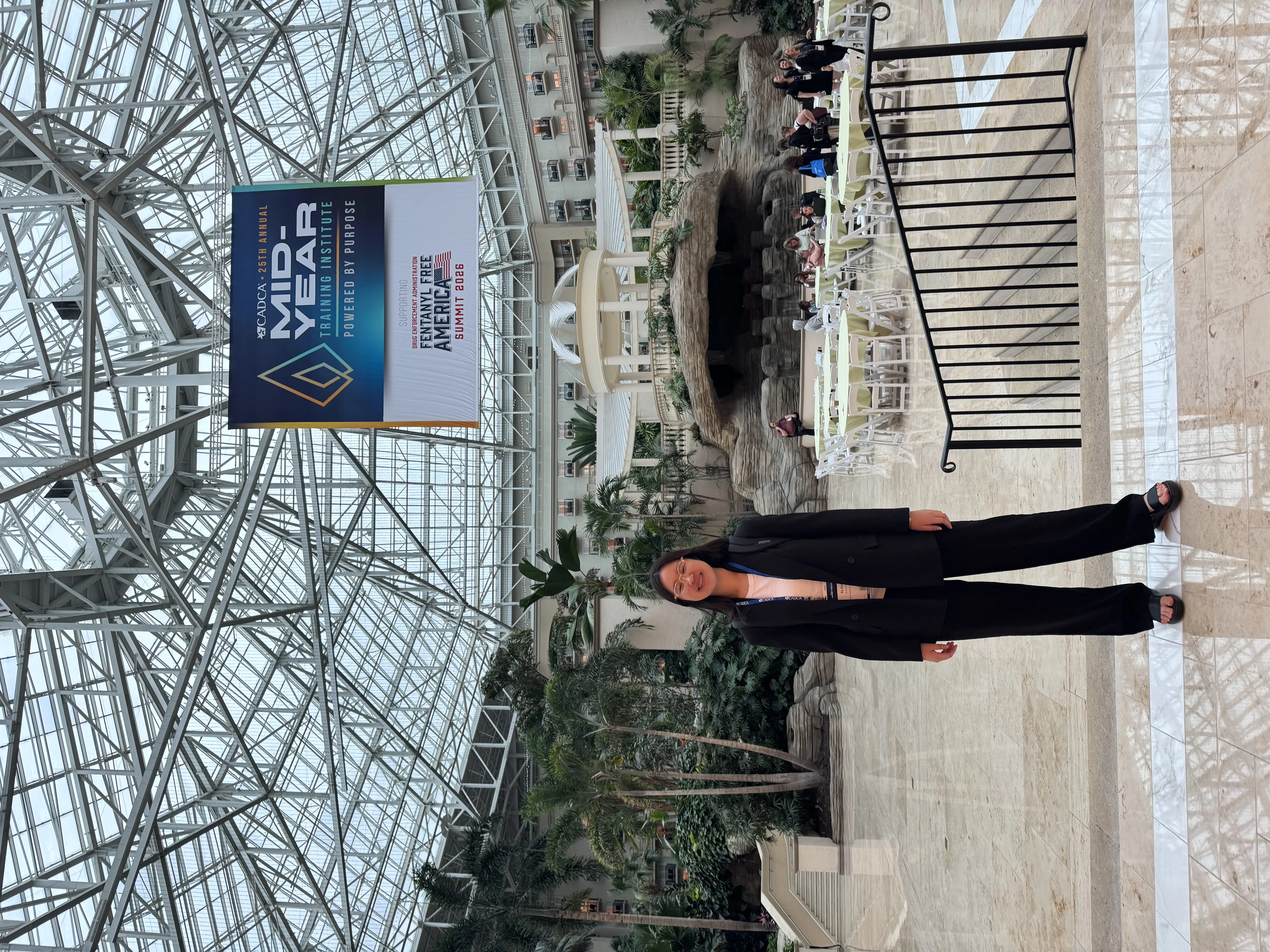
Her work has since expanded to peer education, medication disposal, stigma reduction and community outreach. She has recruited more than 35 community members to take SAFE Project’s No Shame pledge and was selected by Community Anti-Drug Coalitions of America (CADCA) as a featured youth presenter at its mid-year training institute.
But none of that was where she started.
She started by noticing something.
Then she asked a question.
Then she took one step.
That is what makes So Eun’s story particularly important during Prevention Month. Prevention is not reserved for public health professionals, policymakers or people who already consider themselves advocates. It can happen in a classroom, at a pharmacy, in a library or during a conversation between friends.
And you do not need to know exactly where the work will lead before you begin.
As So Eun discovered, confidence can come after action.
“Initially, I did not have confidence in my own voice or in my opinions and perspectives,” she said. Gathering information and seeing the same patterns firsthand gave her something concrete to bring to others. From there, her confidence grew alongside the work.
One small step led to another.
And one young voice became a voice capable of changing her community.
Learn More
-
One Raindrop Can Start Something Bigger: Danielle Choi on the Power of Prevention
“If there is one thing that you should know about prevention, it is that it is applicable to everyone,” Danielle said. “And all it takes is one small step.” Danielle Choi has a favorite way of thinking about collaboration: raindrops. “One person is one raindroplet,” she says. Bring enough of those individual drops together, though,…
-
Starting Small, Saving Lives: How Ronit Ginde Turned One Experience Into Action
“Before joining the Youth Voice Council, most of what I was doing was really focused on Narcan and overdose response,” he said. “The Youth Voice Council helped me look at prevention much more broadly.” When Ronit Ginde arrived on the scene, the young person was unconscious. As an emergency medical technician, Ronit watched his partner…
-
How John “The Cat Guy” Is Using His Story to Reach Others in Recovery
John Riemenschneider shares his recovery journey, exploring addiction, stigma, and how storytelling and connection support long-term recovery.