

“Before joining the Youth Voice Council, most of what I was doing was really focused on Narcan and overdose response,” he said. “The Youth Voice Council helped me look at prevention much more broadly.”
When Ronit Ginde arrived on the scene, the young person was unconscious.
As an emergency medical technician, Ronit watched his partner administer naloxone while he helped ventilate the patient. Eventually, the person woke up and was transported to the hospital.
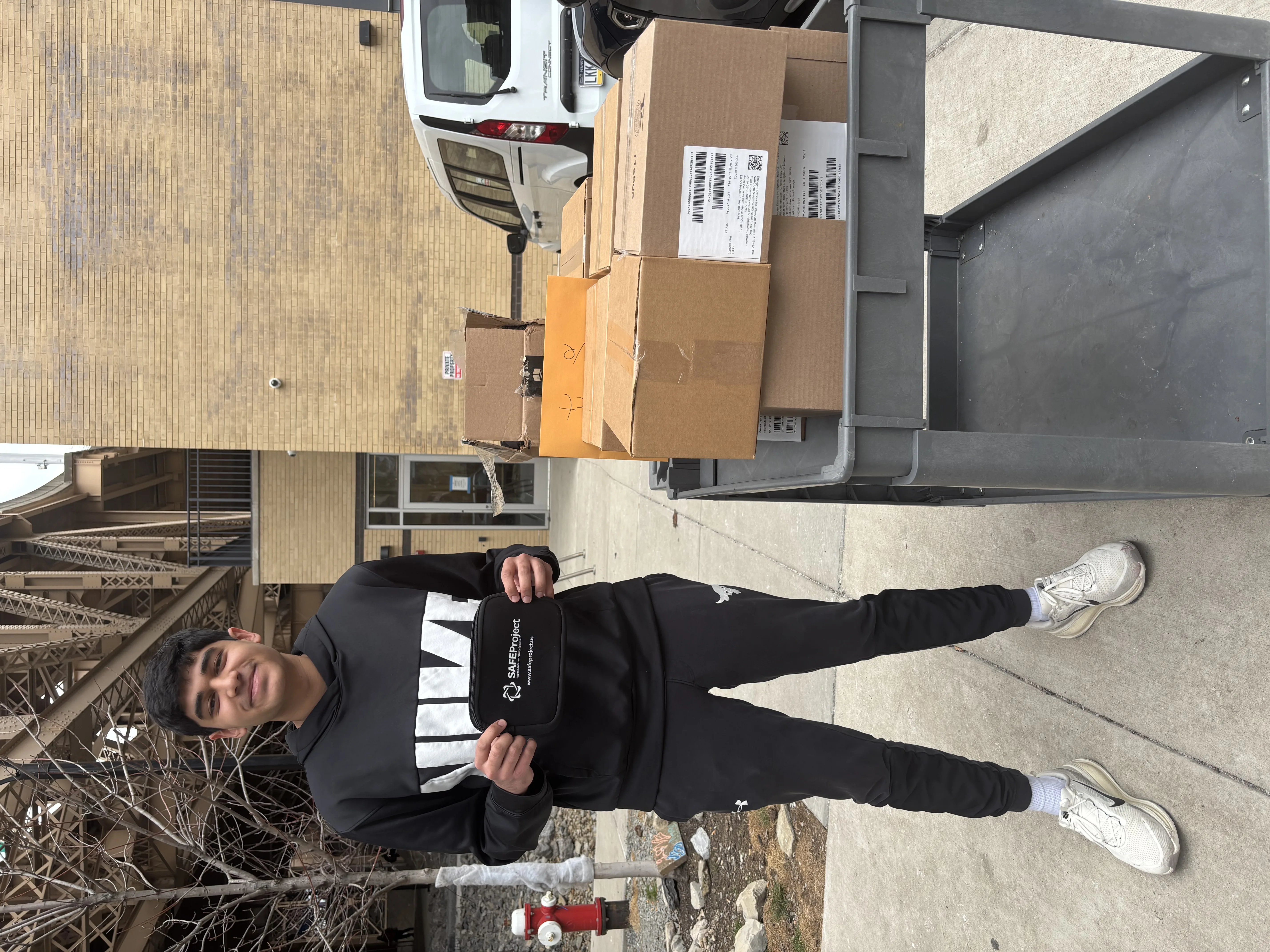
The response worked. But for Ronit, a high school student who had already developed an interest in healthcare and community service, the experience left behind a bigger question.
Why did the naloxone have to arrive with the ambulance?
Before Ronit and his partner could help, someone had to recognize that something was wrong, call 911, and wait for emergency medical services to arrive. Other people had been around the patient, but Ronit didn’t know whether any of them had naloxone or knew how to respond to an opioid overdose.
“What really stuck with me was how much had to happen before naloxone actually got to him,” Ronit recalled. “Why can’t the people who are already there have it and know how to use it?”
That question would eventually become Project Revive, an initiative Ronit founded to expand access to overdose prevention tools and education.
But it didn’t start with a polished plan, a big organization, or a pile of resources.
It started with one high school student deciding to send an email.
From Caring to Doing
Now a senior at North Allegheny High School in the Pittsburgh area and a member of SAFE Project’s Youth Voice Council, Ronit has spent the past several years immersed in healthcare, community service, and overdose prevention. Outside of that work, he’s also a tennis player, an enthusiastic self-described non-chef cook, and a teenager who likes spending time with his friends.
After witnessing the overdose, though, going back to the normal rhythm of school felt different.
Everyone around him seemed to return to their daily routines. Ronit did too, at least outwardly. But he couldn’t shake what he had seen.
“I realized pretty quickly that just caring about the issue wasn’t really actually going to change anything,” he said.
So, he started looking for something he could realistically do as a high school student.
At first, Project Revive was relatively simple: find naloxone and get it to organizations and communities where people might need it. Ronit began reaching out to shelters and recovery centers, purchasing naloxone, raising money, and figuring out each new step as he went.
He didn’t know exactly what he was doing when he started. That’s part of the point.
“Sometimes you just have to be willing to send that first email or make that first phone call,” he said.
Today, Project Revive has distributed approximately 1,100 naloxone kits to organizations in Pennsylvania, West Virginia, and Virginia. Through a tracking system Ronit developed with participating organizations, he has learned that roughly 50 to 60 of those kits have been used during overdoses.
Those numbers transformed the work from something Ronit hoped would make a difference into something tangible.
“Those are still potentially 50 or 60 lives that actually were saved,” he said. “They’re actually there when somebody needs them.
Prevention Is Bigger Than the Moment of Crisis
Ronit’s understanding of prevention has evolved alongside his work.
When he first became involved, much of his attention was understandably focused on overdose response and naloxone. Joining SAFE Project’s Youth Voice Council helped him see a much larger picture.
“Before joining the Youth Voice Council, most of what I was doing was really focused on Narcan and overdose response,” he said. “The Youth Voice Council helped me look at prevention much more broadly.”
Through the Council, Ronit began learning more about stigma, protective factors, prevention education, and the role young people can play in creating healthier communities. He also connected with other students doing prevention work across the country, including another Youth Voice Council member in Georgia with whom he has collaborated on an opioid prevention website.
It also helped inspire his next project: The Overdose Report, a podcast Ronit launched to explore the overdose epidemic through conversations with researchers, EMS professionals, nonprofit leaders, and others working across prevention, recovery, policy, and related fields.
Those conversations reinforced something he was beginning to understand through his own work.
There isn’t one solution to the overdose epidemic.
“There isn’t really just one solution,” Ronit said. “It takes a bunch of different people working on different paths of the problem together.”
And prevention doesn’t begin when someone is already experiencing an overdose.
It can mean education. Reducing stigma. Building protective factors. Having honest conversations about substance use. Making it easier for someone to ask for help. Keeping potentially harmful medications from being misused. And yes, making sure people have naloxone and know how to use it.
“Prevention starts much earlier than the moment when someone’s already in crisis,” Ronit said. “It’s really just like a continuum.”
Finding Ways for Everyone to Participate
That broader view is shaping the next phase of Ronit’s work.
For Prevention Month, he plans to support SAFE Project’s in-home medication disposal efforts by using the distribution networks he has already built through Project Revive to help get disposal products into communities, including shelters,recovery centers, and in the hands of elected officials at the community government level.
It’s another example of something Ronit has learned along the way: You don’t have to be an expert, run an organization, or completely reorganize your life to contribute to prevention.
Sometimes prevention is learning to recognize an overdose and administer naloxone. Sometimes it’s safely disposing of medications you no longer need. Sometimes it’s changing the language you use when talking about substance use and addiction.
And sometimes it’s simply asking an organization already doing the work, How can I help?
That’s the advice Ronit gives other students who see a problem in their community but aren’t sure they’re qualified, experienced, or prepared enough to do something about it.
Start smaller than you think you need to.
“Find one problem you actually care about in your community and then find one thing you can do,” he said.
That one thing might be volunteering. Sending an email. Organizing something at school. Making a phone call. Asking someone already involved where they need help.
Project Revive itself grew that way. One action led to another. Ronit and his peers have since organized multiple community fundraisers, including pickleball tournaments. Their first attracted roughly 50 to 60 participants, and subsequent fundraising efforts have collectively raised approximately $5,000 to $6,000 to support Prevention Point Pittsburgh.
“You don’t need to have the whole plan figured out before you start,” Ronit said. “You just have to keep going one step at a time.”
What Comes Next
Ronit is now preparing for college, but he doesn’t see graduation as an ending point for this work.
He wants to bring the prevention initiatives he’s developed in high school onto a college campus, where he’ll have access to new people, networks, and resources. He’s also interested in another avenue for creating change: public policy.
“I do for sure want to continue this work in college,” he said, including potentially working to help shape government policies while expanding prevention resources within the college environment.
For someone whose work began with a question in the aftermath of an emergency call, that’s a fitting direction.
Because Ronit’s story isn’t really about launching a project, distributing 1,100 naloxone kits, hosting a podcast, or raising thousands of dollars.
It’s about what can happen when someone sees a problem and doesn’t wait until they have the perfect plan, the perfect credentials, or the perfect opportunity to respond.
They just figure out the first thing they can do.
And then theythey ask:
What’s next?
Learn More
-
One Raindrop Can Start Something Bigger: Danielle Choi on the Power of Prevention
“If there is one thing that you should know about prevention, it is that it is applicable to everyone,” Danielle said. “And all it takes is one small step.” Danielle Choi has a favorite way of thinking about collaboration: raindrops. “One person is one raindroplet,” she says. Bring enough of those individual drops together, though,…
-
How So Eun Kang Turned Curiosity into Action
“We have to recognize that we need to push for more prevention, awareness, and also overdose recovery,” she said. When So Eun Kang first noticed naloxone sitting beside the tables in a research lab at Case Western Reserve University, she had a simple question for her mentor: What is this?She learned that naloxone is a…
-
How John “The Cat Guy” Is Using His Story to Reach Others in Recovery
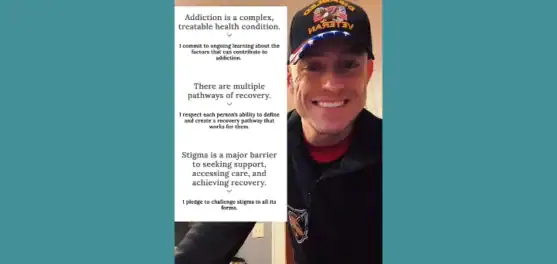
John Riemenschneider shares his recovery journey, exploring addiction, stigma, and how storytelling and connection support long-term recovery.