

“If I had seen someone talking about what I was going through when I was in it, it would have made me feel so much less terrified”
For John Riemenschneider, recovery is not about becoming a different person. It is about learning how to live honestly inside your own life and helping someone else believe they can do the same.
He was born and raised in Des Moines, Iowa, graduated from West Point, and served as an intelligence officer in the U.S. Army before continuing in the National Guard. From the outside, his life followed a structured and disciplined path. But after transitioning out of active duty in 2012, that structure disappeared, and so did a sense of stability. “I couldn’t adjust. I was angry all the time. My mental health was terrible,” he shared.
What followed was not a sudden collapse or a single turning point. It was a gradual shift in how he coped, how he felt, and how disconnected he became.
Substance use became one way to manage what he was experiencing. Over time, it also made things harder. Between 2013 and 2017, his world became smaller and more isolating. Relationships changed, his health declined, and the sense of being stuck grew stronger. “I’m not really sure how I made it out of that alive,” he said.
When people ask what led him to seek help, John does not describe a moment of sudden clarity. Instead, he talks about accumulation. Things were building to a point where continuing as he was, no longer felt possible. He entered detox in a hospital, transitioned into inpatient treatment, and then continued with intensive outpatient care. It was not about fixing everything at once. It was about taking the next step that was available.
More than eight years later, John is clear that recovery is not a finished state. It is something he continues to engage with every day. “My life is not perfect, but my life is now real,” he said. “I get to feel everything now, even the painful parts.”
That perspective challenges a common misconception that recovery means leaving difficulty behind. Instead, it often means developing the ability to move through it.
At SAFE Project, storytelling plays an important role in shifting that understanding. Stories like John’s do not present a simple before-and-after. They show what it looks like to continue forward, even when things are still hard. That kind of honesty helps reduce stigma and creates space for people to see themselves in the process, rather than outside of it.
Fear is one of the most consistent barriers he remembers. Not just fear of stopping substance use, but fear of what comes next and how it will feel. “I had never been so scared of something in my entire life,” he said about walking into early recovery spaces. Instead of dismissing that fear, he names it.
Stigma shaped his experience in quieter ways as well. Some of it came from people who did not understand addiction as a health issue. Some of it showed up internally. “People attach your worth as a person to addiction…like you’re weak or morally flawed,” he said.
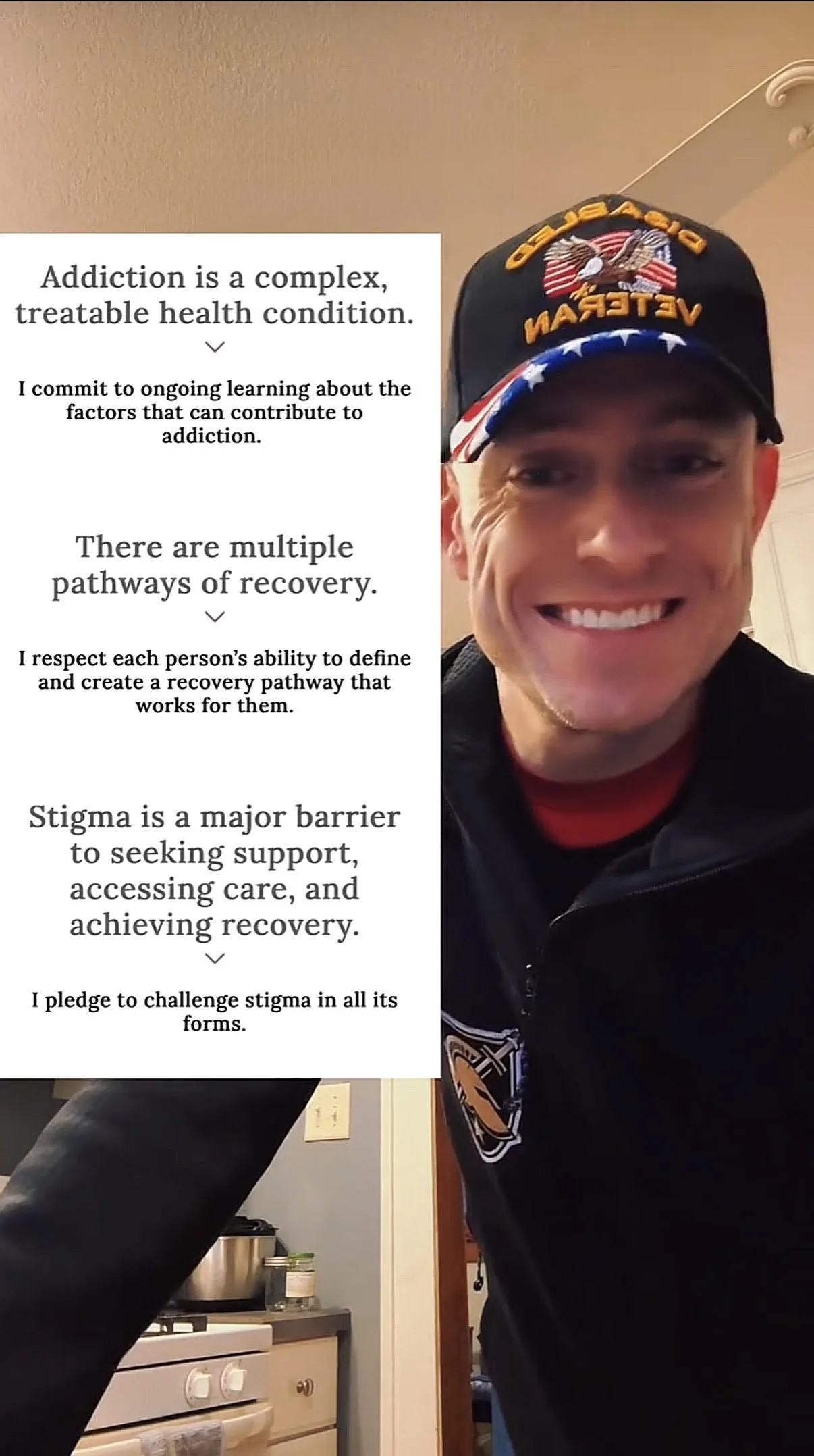
A few years into recovery, John decided to share his experiences more publicly. He began posting on TikTok without knowing who, if anyone, would see it. What motivated him was simple: If someone heard a story like his while they were struggling, it might have changed how alone they felt. “If I had seen someone talking about what I was going through when I was in it, it would have made me feel so much less terrified,” he said.
Over time, those videos reached people who were looking for exactly that. Not polished answers or perfect outcomes, but recognition and validation. Messages began coming in from people who said the content helped them take a step, ask a question, or feel less isolated in their own experience.
The reception to John’s videos further confirms our long-standing belief that connection can be one of the most powerful tools in recovery and prevention, and can save lives. SAFE Project defines recovery as highly individualized, meaning the journey of recovery and the journey to recovery can look different for each individual experiencing it. But, in most instances, that journey requires connection, relationships, and the simple idea of feeling seen.
The ideas he returns to most often are simple, but not always easy to believe at first. One is that no one is as alone as they feel. “Even when I was around people, I was so alone,” he said. The other is that progress is not linear. Difficult days, setbacks, and complicated emotions are part of the process, not signs of failure. “We’re not mastering any of this. We’re just trying to make progress.”
Outside of his videos, John’s life includes smaller, grounding connections that matter just as much. Known online as “the cat guy,” he often shares moments with Selena, the cat he adopted after losing the pets he once considered family. “She’s the light of my life. She helps me in my recovery,” he said. These kinds of connections, whether with people, routines, or even pets, can play a meaningful role in sustaining recovery over time.
Looking at the broader landscape, John believes conversations around addiction and mental health are becoming more open. There is still stigma, especially in spaces like the military where expectations around strength and self-reliance can make it harder to speak up, but there is also movement.
“I’m just one guy,” John said. But stories like his do not need to be extraordinary to make an impact. They need to be honest. When someone recognizes a part of their own experience in someone else’s words, it can create just enough space to consider a next step. And sometimes, that is where change begins.
John’s journey through substance use, treatment, and recovery, and the impact he is making by sharing his story are a great example of the power of connection and storytelling.
Caring and understanding communities play a vital role in both initiating and sustaining personal change, especially when individuals feel supported rather than alone in their efforts. If you’d like to develop your own skills in supporting those impacted by substance use disorder or individuals in recovery, take SAFE Project’s Recovery Allyship Training here.
Want to hear more from John?
Follow John Riemenschneider on TikTok for honest conversations about recovery, mental health, and what it looks like to keep going.