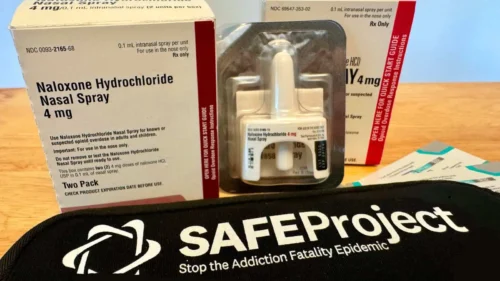

Naloxone is a non-scheduled (non-addictive) medication used in opioid overdoses to counteract life-threatening depression of the central nervous system and respiratory system, allowing an individual experiencing an overdose to breathe normally. Naloxone can be administered by non-medical personnel, which makes it ideal for individuals to treat overdose in people who have been prescribed opioid pain medication and in people who use heroin and other opioids. Naloxone only works if a person has opioids in their system and the medication has no effect if opioids are absent (National Harm Reduction Coalition). It may take multiple doses of naloxone to take effect. There is no harm in giving a person who is experiencing an overdose multiple doses of naloxone.
Read Video Transcript
NALOXONE SAVES LIVES
No time to sit idly by. More and more people are dying of overdose from the likes of heroin, fentanyl, and prescription pain medications like oxycodone and hydrocodone. These are all examples of opioids.
Opioids are drugs derived from the opium poppy plant or made in the lab. They can treat pain, cough and diarrhea. But opioids can also be addictive and even deadly. The number of opioid overdose deaths has escalated more than 400% since the turn of the century, with tens of thousands of lives now being lost every year.But many deaths can be prevented with a life-saving treatment: naloxone.
When given right away, naloxone can work in minutes to reverse an overdose. Naloxone is safe, has few side effects, and some forms can be administered by friends and family.
When is naloxone used?
You can save a life. First, recognize signs of overdose: Limp body; Pale, clammy face; Blue fingernails or lips; Vomiting or gurgling sounds; Inability to speak or be awakened; Slow breathing or heartbeat. If you see these symptoms, call 911 immediately and consider the use of naloxone if available.
How is naloxone given?
Home preparations include a nasal spray given to someone while they lie on their back or a device that automatically injects medicine into the thigh.
Sometimes more than one dose is needed. The person’s breathing also needs to be monitored. If the person stops breathing, consider rescue breaths and CPR if you are trained until first responders arrive.
How does naloxone work?
Naloxone is an opioid antagonist, which means that it blocks opioid receptors from being activated. It is so strongly attracted to the receptors that it knocks other opioids off. When opioids are sitting on their receptors, they change the activity of the cell. Opioid receptors are found on nerve cells all around the body: In the brain, opioids produce feelings of comfort and sleepiness. In the brainstem, opioids relax breathing and reduce cough. In the spinal cord and peripheral nerves, opioids slow down pain signals. In the gastrointestinal tract, opioids are constipating. These opioid actions can be helpful! The body actually produces its own opioids called “endorphins,” which help calm the body in times of stress. Endorphins help produce the “runner’s high” that helps marathon runners get through grueling races. But opioid drugs, like prescription pain medications or heroin, have much stronger opioid effects. And they are more dangerous.
Over time, frequent opioid use makes the body dependent on the drugs. When the opioids are taken away, the body reacts with withdrawal symptoms such as headache, racing heart, soaking sweats, vomiting, diarrhea, and tremors. For many, the symptoms feel unbearable. With continued use, opioid receptors also become less responsive and the body develops tolerance to the drugs. More drugs are needed to produce the same effects… which makes overdose more likely.
Overdose is dangerous especially for its effect in the brainstem, relaxing breathing. Breathing can be relaxed so much that it stops…leading to death. Naloxone knocks opioids off their receptors all around the body. In the brainstem, naloxone can restore the drive to breathe. And save a life. But even if naloxone is successful, opioids are still floating around, so expert medical care should be sought as soon as possible. Naloxone works for 30-90 minutes before the opioids return to their receptors. Naloxone may promote withdrawal because it knocks opioids off their receptors so quickly. But otherwise naloxone is safe and unlikely to produce side effects.
Naloxone saves lives. From 1996 to 2014, at least 26,500 opioid overdoses in the United States were reversed by laypersons using naloxone. While naloxone is a potentially life-saving treatment, more needs to be done to solve the opioid overdose epidemic. The National Institutes of Health launched the HEAL Initiative in 2018, expanding research across multiple NIH Institutes and Centers to speed scientific solutions to the national opioid crisis. Research is underway to improve treatments for opioid misuse and addiction, and to enhance pain management. The National Institute on Drug Abuse, or NIDA, is the leading NIH institute for research on opioid misuse and addiction, and its support helped the development of the user-friendly naloxone nasal spray.
For more information, see NIDA’s website at drugabuse.gov and search “naloxone,” or visit nih.gov and search “NIH heal initiative.” General opioid information can also be found at MedlinePlus.gov. This video was produced by MedlinePlus, a trusted source of health information from the National Library of Medicine.
Preparing, Recognizing, and Responding to an Overdose
Pharmacy: The branded NARCAN® Nasal Spray is now available over-the-counter nationwide. Additionally, individuals can still also purchase naloxone directly from a pharmacist under a statewide standing order, although programming may differ from state to state.
Insurance: Naloxone is accessible to most insurance holders for a $0 copay. Contact your health insurance provider to find out your coverage and co-pay requirements.
Naloxone by Mail Through Next Distro: Explore options for finding naloxone in your own community prior to requesting through the mail with NEXT. NEXT is actively working to reserve their resources for those who truly have no other access points available to them.
Local health departments and community based service providers that serve individuals with substance use disorders may also have naloxone available.
Local Harm Reduction Agencies are able to offer naloxone and training on how to respond to an opioid overdose, and may have other services that can be helpful for individuals who use drugs and their network. Check for resources in your state via NASEN.
An overdose happens when a toxic amount of a drug, or combination of drugs overwhelms the body. Opioid overdoses happen when there are so many opioids or a combination of opioids and other drugs in the body that the individual is not responsive to stimulation and/or breathing is inadequate.
Signs of an opioid overdose may include loss of consciousness; unresponsive to outside stimulus; awake but unable to talk; breathing is very slow and shallow, erratic, or has stopped; blue/purple or grayish skin; choking sounds, or a snore-like gurgling noise; vomiting; limp body; a face that is pale or clammy; pulse is slow, erratic, or not there at all. In the event of an overdose, complete the following steps:
STEP 1: Stimulate them awake by yelling their name and administering a hard sternum rub to the chest plate.
STEP 2: If you have naloxone, use it. Administer one dose every two minutes.
- Injectable: Draw up the entire vial and inject it into the thigh muscle.
- Nasal: Stick the device all the way up one nostril and click the plunger, making sure the device is inserted fully (the medication will absorb through the sinuses).
STEP 3: Call 911; explain someone is not responsive and not breathing.
STEP 4: Provide rescue breathing. Get the person on their back, tip their head back to straighten the airway, pinch their nose, put your mouth over theirs and form a seal, one breath every five seconds.
STEP 5: When the person starts to breathe regularly on their own, roll them into a recovery position on their side.
STEP 6: Be gentle with them and yourself afterward!
SAFE Project provides further information on substances and how to respond to an overdoses. For additional questions on opioid overdose reversals, see the National Harm Reduction Coalition’s Overdose FAQs.
Xylazine is an alpha-2 adrenergic agonist that induces sedation and pain relief in animals such as horses. In the past several years, usage of xylazine by people has increased, contributing to rise of 0.36% of overdose deaths in 2015 to 6.7% in 2020.
When used by people, xylazine can lead to serious health issues, including respiratory depression, cardiovascular disturbances, gastrointestinal problems, and muscle tremors. The drug’s narrow therapeutic window increases the risk of overdose and toxicity, making it potentially life-threatening in excessive amounts. Xylazine can also cause severe skin wounds on the user, leading to additional health complications.
While naloxone can counteract the effects of opioids, it is ineffective against xylazine toxicity, as xylazine acts on different receptors in the central nervous system.
Naloxone Training
The Role of Harm Reduction
Harm Reduction is embedded into SAFE Project’s Core Beliefs and is in line with our efforts to get naloxone into the hands of every individual and into our communities. It is the most effective way to prevent an overdose death. Practicing harm reduction by reversing an overdose can open doors to positive change, non-judgmental care, improved individual and community well-being, and recovery.
Fentanyl is a powerful synthetic opioid that is about 50 times stronger than heroin and it can be found in a number of different substances, like heroin, meth, cocaine, and pressed pills. Fentanyl Test Strips can identify the presence of fentanyl, but not the amount of fentanyl in the tested sample.
Your local Harm Reduction Agency or Health Department may offer fentanyl test strips at discounted prices or even for free. Check the resources available in your area. There are many different brands of affordable fentanyl test strips available for purchase in stores or online at retailers.
Please note fentanyl test strips are considered drug paraphernalia in Idaho, Indiana, Iowa, North Dakota, and Texas. Please check the legal status in your area.
Learn More
Resources, Articles, & Help Guides

Fentanyl

Naloxone Accessibility Challenge